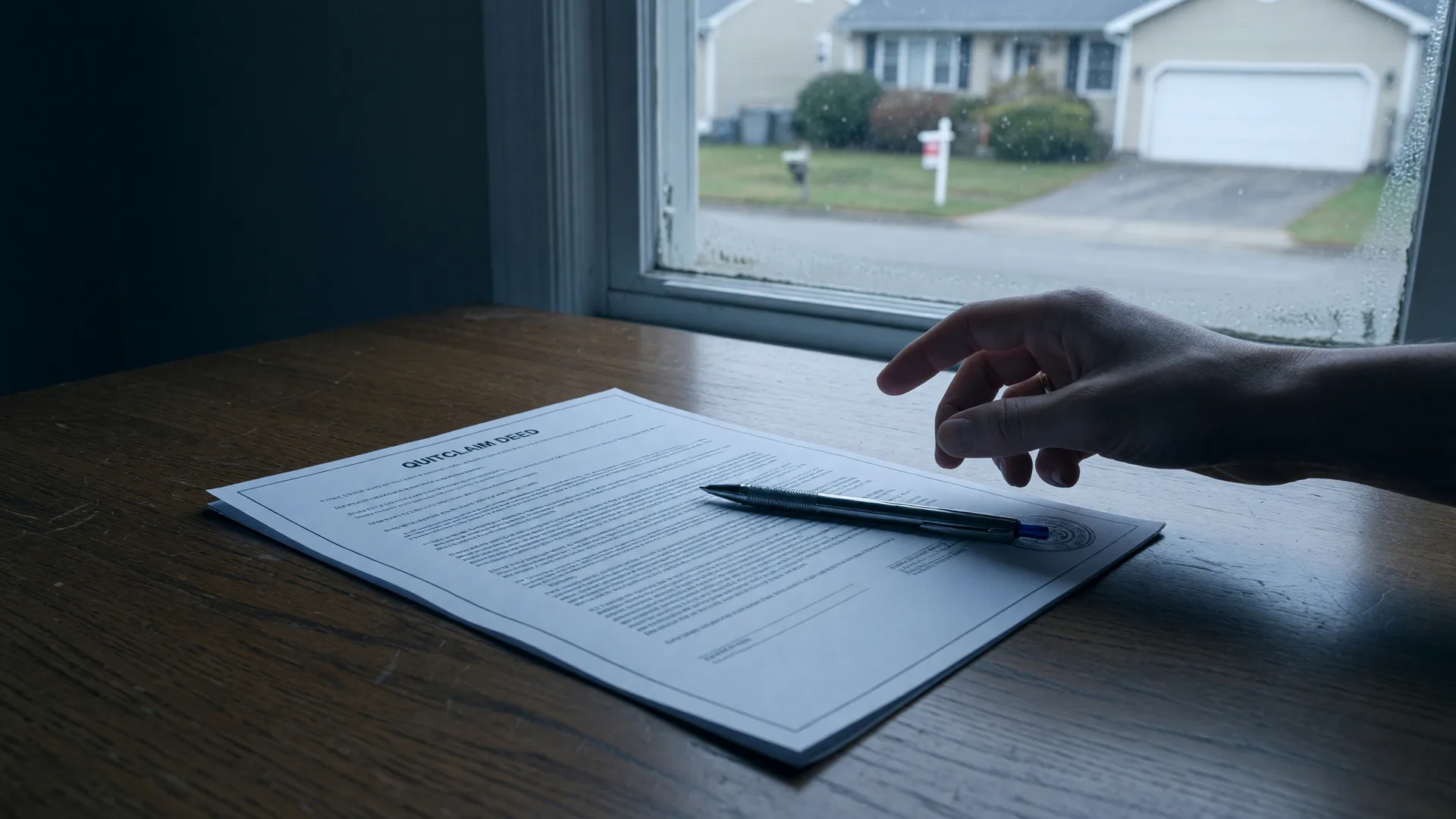
Your name is the only one on the deed, so why is the closing team asking your spouse to sign it too? Because Nevada is a community property state: real estate acquired during a marriage belongs to the marriage, not just to the spouse whose name is on the paper. That single rule drives one of the most common surprises at Nevada closings, and it protects you, your lender, and every buyer who comes after you. This article explains what the law actually says, what happens behind the scenes at a closing, and what to do when a spouse cannot or will not sign.
Why Does My Spouse Have to Sign When Only My Name Is on the Deed?
You buy a house. Only your name is on the purchase contract and the loan application. Weeks later, the title company tells you your spouse also needs to sign the grant deed, and your lender wants them on the deed of trust. Some couples shrug and bring a second pen. Others are offended, or the spouse refuses on principle, and the closing date quietly starts slipping.
The request is not the title company being difficult. Behind it is Nevada community property law, which treats most property acquired during marriage as belonging equally to both spouses. The name on the deed does not change that legal reality, and the title company and lender are simply structuring the closing around it. Understanding why the signature is required turns an irritating surprise into an expected, manageable step.
Nevada Is a Community Property State
Nevada is one of nine community property states. In those states, most property either spouse acquires during the marriage is owned equally by both spouses, regardless of whose name is on the title, the loan, or the tax bill. That is the default rule for married couples in Nevada, and it applies to real estate more strictly than to almost anything else.
The statutory presumption is in NRS 123.220: all property acquired after marriage by either spouse is community property unless it falls within one of the listed exceptions. The exceptions, in NRS 123.130, are separate property: property a spouse owned before the marriage, property acquired during marriage by gift, bequest, devise, or descent, and the rents, issues, and profits of separate property. A valid written agreement between the spouses, such as a premarital or postmarital agreement under NRS 123.259, or a decree of separate maintenance, can also keep property separate.
The key phrase is "regardless of whose name is on the deed." A married person who buys a house in their own name has, as a matter of Nevada law, bought community property. The deed records who holds title, but it does not change how the property is characterized between the spouses. That gap between what the deed says and what the law says is exactly where the closing problems start.
The Rule That Requires Both Signatures: NRS 123.230
The signature requirement itself comes from NRS 123.230. It provides that neither spouse may sell, convey, or encumber community real property unless both join in the execution of the deed or other instrument, and the instrument must be acknowledged by both. In plain English: when the property is community property, one spouse alone cannot deed it away, mortgage it, or grant an interest in it.
What happens if a deed or deed of trust is signed by only one spouse? The document does not comply with the statute, and it is voidable at the instance of the spouse who did not sign. In practice, that means the nonsigning spouse could later challenge the conveyance or the lien, and a court could undo it. For a buyer, that is not marketable title. For a lender, that is not a valid first lien on the whole property. A title insurer will not write a clean owner's or lender's policy over a recorded document that can be attacked, which is why the missing signature has to be fixed before funding, not after.
What Happens Behind the Scenes at Your Closing
When your file reaches the title company, the examiner builds the chain of title and the underwriter applies the rules for the transaction. The examiner learns you are married from the purchase contract, from prior deeds in the chain, or from public records, and the community property question comes up automatically. From there, two sets of requirements run in parallel.
On the title side, to insure the buyer's ownership, the non-buying spouse must join in the grant deed or sign a separate document releasing any potential community interest, usually a quitclaim deed or a spousal consent. The goal is that the buyer receives marketable title to the entire property, not just to one spouse's half. The title company's underwriting guidance, including the Nevada practices published by national underwriters such as Stewart Title and WFG National Title, reflects this requirement.
On the lender side, the lender's title policy protects the lender's lien, and the lender wants that lien to attach to the whole community estate. Underwriters generally require both spouses to be parties to the deed of trust unless the property is clearly proven to be sole and separate property, and even then they may require a recent relinquishment of any potential community interest. A deed of trust signed by only one spouse gives the lender security only in that spouse's interest, and a conventional lender will not fund against that.
There are two common ways to get the signature: the spouse joins the conveyance itself, signing the grant deed as a co-grantor, or the spouse signs a separate instrument, such as a quitclaim deed or spousal consent, that releases any community interest in the property. Which one the file needs depends on the underwriter, the lender, and how the property is titled. Requirements vary by underwriter, lender, county, and transaction type, so the right move is to let your title team tell you exactly what your file requires rather than assuming one form fits every deal.
When the Property Is Genuinely Separate Property
If the house is truly separate property, the other spouse's signature is not legally required. That covers property you owned before the marriage, property received as a gift or inheritance during the marriage, and property held under a valid premarital or postmarital agreement under NRS 123.259. It also covers property covered by a decree of separate maintenance.
The catch is proof. The title company does not take your word that the property is separate, because the community property presumption in NRS 123.220 has to be overcome with documentation. The file may need the closing statement showing the purchase predated the marriage, an inheritance or gift record, or the written agreement itself. Even with strong proof, some underwriters still ask for a signed relinquishment from the spouse to remove every doubt, because a claim from a nonsigning spouse is exactly the kind of risk a title policy exists to eliminate. If keeping the house separate matters to you, the strongest tool is a written agreement made before or at the time of the transaction, not a document drafted during the escrow countdown.
Community Property With Right of Survivorship
The community property rules also shape what happens to a house when one spouse dies, and Nevada gives married couples a specific choice about it. Under the default rule in NRS 123.250(1), when a spouse dies, an undivided half of the community property becomes the surviving spouse's separate property, and the decedent's remaining half is subject to their will or passes to the surviving spouse. That remaining half is the only portion subject to probate administration.
NRS 123.250(2) creates the exception many Nevada couples choose: community property with right of survivorship. When a married couple holds title that way, the entire property passes directly to the surviving spouse by right of survivorship, bypassing the deceased spouse's estate and probate entirely. It is a deliberate vesting choice that is made on the deed at closing, which is one more reason the signature line on the deed matters long after the closing file is closed. For a deeper look at what happens to a house after a death, see Someone Died. Who Actually Owns the House Now?
The Scenarios That Actually Stall Closings
- Buying solo while married. The most common case. One spouse buys, both must sign the deed, and the lender wants both on the deed of trust. Plan for it from the first conversation with your lender.
- Refinancing with one spouse on title. A refinance is a new encumbrance, so the lender will want both spouses on the new deed of trust even when only one spouse has been on title throughout the marriage. If the other spouse has moved out or the marriage has soured, this becomes a legal problem, not a paperwork problem.
- Selling after a spouse dies. Who can sign depends on how the property was vested and whether probate is required. Community property with right of survivorship passes directly to the survivor; the default rule leaves half subject to the decedent's estate.
- Divorce. Until the divorce decree is final and any transfer or quitclaim is recorded, an ex-spouse may still hold an interest in the property, and the title company will ask about it. The related questions around quitclaim deeds are covered in Quit the Quitclaim: Why You Should Think Before Deeding Your Property Away.
- Moving to Nevada from a non-community state. Property you bought before you became a Nevada married couple is generally your separate property, but refinancing it here can raise the same questions, and commingling separate funds with community income can blur the line over time.
- A spouse who cannot sign. If a spouse is unavailable, incapacitated, or refuses, the title company cannot simply accept a phone call. Powers of attorney are scrutinized hard at real estate closings, and the reasons are worth reading in Why Title Companies Say No to a Valid-Looking Power of Attorney.
What to Do Before You Get to the Closing Table
- Tell the title company and lender about your marital status on day one. The word "married" on the intake form saves a week of scrambling later, even when the property is separate property.
- If it is separate property, gather the proof early. The premarital agreement, the pre-marriage closing statement, the inheritance records. Documentation that exists before escrow opens is worth ten times the same paperwork produced at the last minute.
- Plan for the spouse to sign with you. Nevada acknowledgments on a deed of trust or grant deed generally require both spouses to appear, sign, and acknowledge. Make sure the spouse is at the signing or has executed the required consent in advance.
- Choose the vesting deliberately. Sole and separate property, community property, and community property with right of survivorship each mean something different at death and at the next sale. Changing vesting later means another recorded deed, so make the choice on purpose the first time.
- Raise a missing spouse immediately. If a spouse cannot or will not sign, say so the week the file opens, not the day before funding. These issues are usually fixable with time and documents; they are almost never fixable at the table.
The Bottom Line
Community property law is the reason a married buyer's spouse almost always has to sign at a Nevada closing even when only one name is on the deed. NRS 123.220 presumes property acquired during marriage is community property, NRS 123.230 requires both spouses to join in conveying or encumbering it, and title underwriters and lenders structure the closing around those rules so the buyer receives marketable title and the lender gets a valid first lien on the whole property. Say the word "married" early, bring the separate property paperwork if you have it, and let your title team tell you exactly which signatures your file needs. That is far easier than discovering on signing day that the deed will not work without your spouse's pen.
Data & Sources
Sources and References
- Nevada Revised Statutes, Chapter 123 (Rights of Married Couples): NRS 123.130 defines separate property (owned before marriage; acquired during marriage by gift, bequest, devise, or descent, with the rents, issues, and profits). NRS 123.220 provides that property acquired after marriage by either spouse is community property unless it falls within the listed exceptions. NRS 123.230 provides that neither spouse may sell, convey, or encumber community real property unless both join in the execution of the deed or other instrument and acknowledge it. NRS 123.250 governs the disposition of community property on death, including community property with right of survivorship in subsection 2. NRS 123.259 governs premarital and postmarital agreements. leg.state.nv.us/NRS/NRS-123.html.
- Stewart Title, Nevada Real Estate Practices: underwriting guidance on spousal joinder and the relinquishment of any potential community interest when a married person conveys or encumbers real property in Nevada. assets.stewart.com/en/real-estate-practices/nevada.html.
- WFG National Title, Nevada Underwriting Summary: underwriting guidance requiring both spouses to be parties to the security instrument unless the property is clearly proven to be sole and separate property, and noting the possible requirement of a relinquishment of any potential community interest. uww.wfgnationaltitle.com.
- Nevada Realtors, "Signing Off! Proper Signatories to Contracts": quoting NRS 123.230, a deed signed by only one spouse does not comply and is at least voidable at the instance of the nonsigning spouse, creating a title defect. nevadarealtors.org.
This article is general education about Nevada community property law and how it affects real estate closings, and it is not legal, tax, or lending advice. Requirements vary by title underwriter, lender, county, transaction type, and individual circumstances. Confirm the requirements for your specific transaction with your title company, lender, and qualified Nevada counsel.
Published November 17, 2026. Nevada law references follow NRS Chapter 123 as published at the time of writing. Community property rules vary by state, and underwriting requirements vary by title insurer and lender.