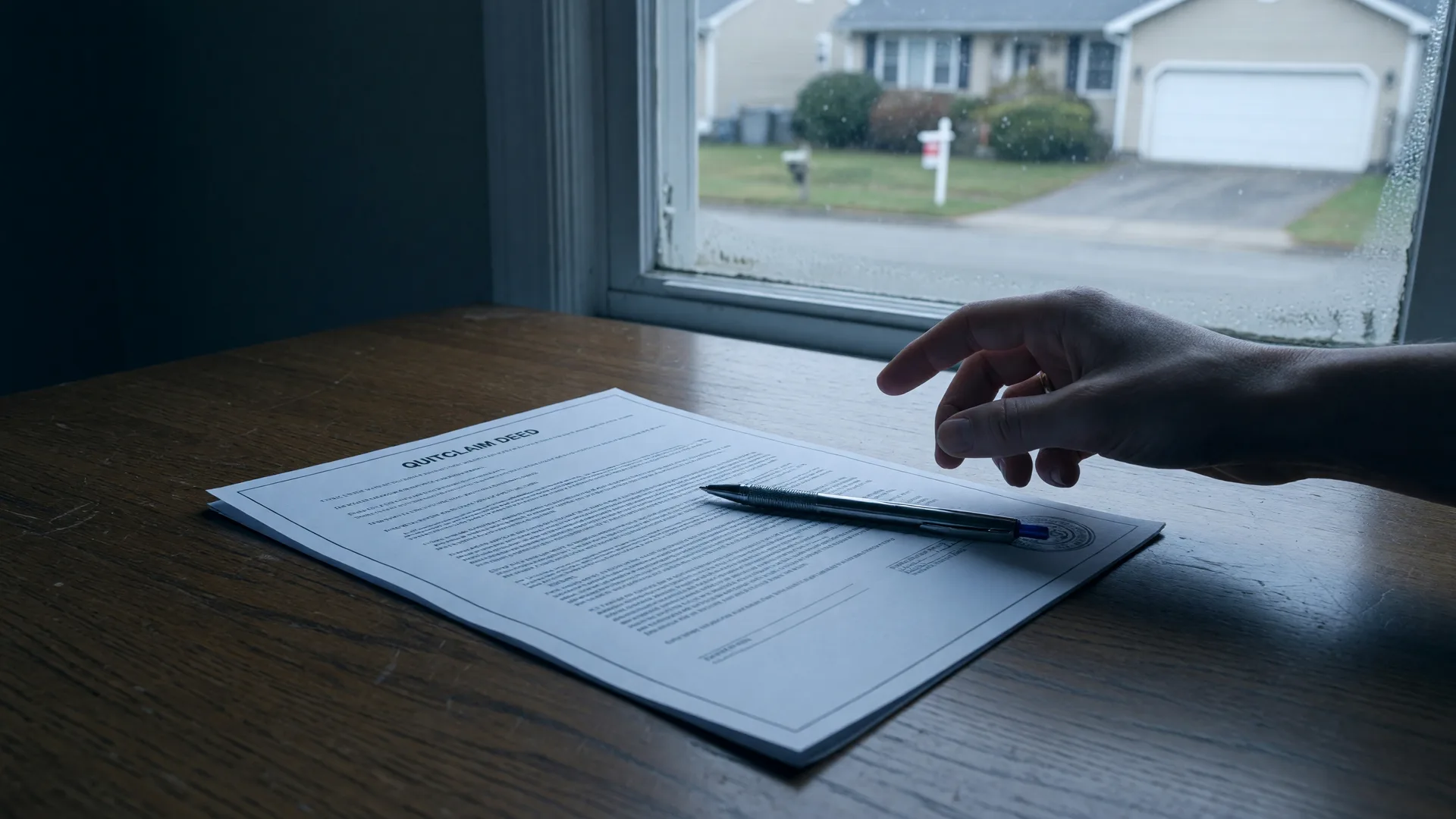
A quitclaim deed is easy. It's inexpensive. You can download a form online and fill it out in an afternoon.
And it can create a mess that takes years to untangle.
People "just quitclaim the house" to a child, a spouse, an ex-spouse, or a family member for all kinds of reasons. Sometimes it works out. Sometimes it quietly destroys the very thing they were trying to protect.
Before you sign one, here's what you need to understand.
What a Quitclaim Deed Actually Does
A quitclaim deed transfers whatever ownership interest the grantor (the person signing) currently has in the property. No more, and no less.
Here's the part that surprises people: a quitclaim deed makes no promises about the title.
Unlike a warranty deed, it doesn't warrant that the property is free of liens, encumbrances, or other claims. The grantee takes the property exactly as-is, with whatever clouds on title may exist.
In other words, the grantor is saying: "I give you whatever I have." If what they have is tangled, the recipient inherits the tangle.
The Tax Problem Nobody Mentions
A quitclaim deed is a transfer of real property. Depending on the circumstances, a transfer can have tax consequences:
- Gift tax implications, because giving away a house is a gift of value.
- Loss of the step-up in basis that heirs might otherwise receive at death, which can mean a much larger capital gains bill when the recipient eventually sells.
- Property tax reassessment in some states, which can raise the annual tax bill.
- Recording fees and transfer taxes at the time of the transfer.
What looks like a free transfer can be an expensive one in the long run.
The Mortgage Problem
If there's a mortgage on the property, a quitclaim deed does not remove the borrower from the loan. And depending on the loan documents, transferring title could trigger the due-on-sale clause, which allows the lender to demand full payment.
The person who signed the note remains personally responsible for the debt. Even if they no longer own the house, the lender can still come after them if payments stop.
The Medicaid and Estate Planning Problem
If the transfer is meant to protect the property from future care costs, be very careful.
Medicaid has a five-year look-back period. A transfer of assets for less than fair market value during that window can trigger a penalty period that delays eligibility for long-term care benefits.
People quitclaim their homes to children believing they've "protected" the asset. In reality, they may have created a penalty, removed their own control, and made it harder to pay for care when they need it.
The Family Problem
Consider what happens after the transfer:
- The new owner gets married or divorced, and the home becomes part of that marital estate.
- The new owner files for bankruptcy, and the home is at risk.
- The new owner dies, and the home passes through their estate instead of the parent's plan.
- One child is named on the deed and other children feel cut out.
Once the deed is recorded, the original owner has given up control. Fixing any of these situations later can require the cooperation of everyone involved, and sometimes a court.
When a Quitclaim Deed Makes Sense
A quitclaim deed is not inherently bad. It's a tool, and tools are only as good as the job they're used for.
Common appropriate uses include:
- Clearing a possible defect in the chain of title, such as a spouse confirming they have no claim to a property.
- Transferring property between spouses as part of a divorce settlement, when the terms are already decided.
- Moving property into a trust or an entity the owner controls, when that is the right strategy.
Better Alternatives Usually Exist
In many situations, one of these may serve the goal better:
- A warranty or grant deed, when the transfer is a true sale or gift and the recipient deserves the protection.
- A revocable living trust, which can avoid probate while letting the owner keep control during their lifetime.
- A beneficiary or transfer-on-death deed, where available, which can pass the home at death without giving up ownership today.
- A properly drafted will, coordinated with the rest of the estate plan.
The Bottom Line
The internet makes quitclaim deeds look like the easiest solution to any ownership question. The truth is that a deed transfer changes ownership, and ownership changes have consequences.
Before you sign away a home, talk to a real estate attorney and a qualified tax or estate planning professional. Ask what the transfer will mean for taxes, mortgages, Medicaid, property taxes, and the family.
A few hundred dollars of professional advice up front is cheap compared with the cost of unwinding a deed that should never have been signed.
This article provides general educational information and is not legal, tax, or estate planning advice. Deed requirements and consequences vary by state. Consult a licensed attorney and qualified tax or elder law professional before transferring real property.