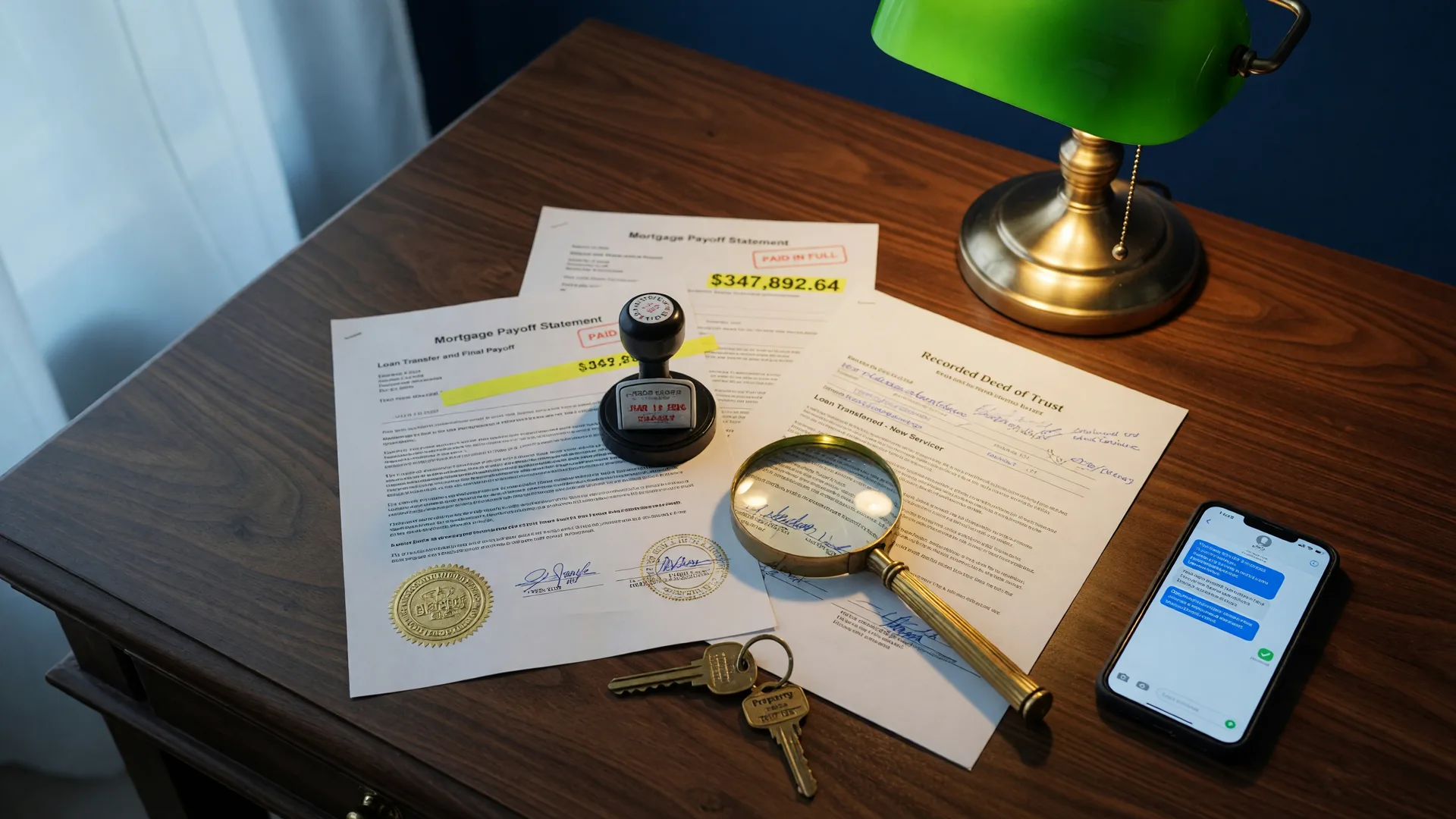
In a seller-financed sale, nobody sends the seller a wire for the financed portion of the house. The buyer puts down cash, signs a promissory note, and the seller becomes the lender, which means the closing table looks completely different from a bank closing and the title work is what protects the deal from falling apart. Seller financing has surged as mortgage rates have stayed in the 7% range, and it is one of the creative-transaction structures more buyers and sellers are exploring now than in years. The two documents that matter most are the promissory note, which is the buyer's promise to pay, and the deed of trust, which is the seller's lien against the home if the buyer stops paying. Getting the deed of trust drafted, recorded, and in the right position is exactly where a title and escrow company earns its keep, and where deals that skip the paperwork quietly die.
This article walks through what a seller-financed closing actually looks like, why the seller's deed of trust feels like a mortgage but is not one from a bank, the due-on-sale risk a seller takes on if they still carry their own mortgage, the second-position reality when a real lender is in front, and why title insurance exists in these deals. It is education, not advice, and it reflects national law and practice; Nevada has its own recording and foreclosure rules that a licensed professional should walk you through before you sign anything.
What Actually Happens at a Seller-Financed Closing
Mechanically, a seller-financed closing and a bank-financed closing look a lot alike. The title company or escrow agent runs a title search, issues a commitment, prepares a settlement statement, coordinates the recording of documents, and disburses funds. The differences are in the money flow and in what gets recorded:
- Funding. In a bank closing, the lender wires the full purchase price and escrow pays the seller and their payoff. In seller financing, there is no lender wire for the financed portion. The buyer brings a down payment, and the seller is not paid the financed amount at closing at all. The seller accepts that money over time, plus interest.
- The promissory note. The buyer signs a note setting out the principal, interest rate, payment schedule, maturity, and default and prepayment terms. The seller keeps the original; escrow does not. On its own, a note is just a promise to pay and places no lien on the property.
- The deed of trust. This is the security instrument that gives the note its teeth. Escrow records both the deed transferring the property to the buyer and a new deed of trust in favor of the seller, securing the note. It is what gives the seller a lien and, eventually, the power to foreclose if the buyer defaults.
- Title insurance. A lender's title policy is typically issued with the seller named as the insured lender, protecting the seller's lien position the same way a bank's policy would protect a bank.
The sentence to remember is the second one: the note alone puts no lien on the house. Many first-time seller-financiers believe the signed note is all the protection they need. It is not. Without a properly drafted and recorded deed of trust, the seller holds an unsecured debt with nothing collateralizing it.
Why Recording the Deed of Trust Is the Whole Game
Recording is what establishes where the seller's lien sits in line. Under the first-in-time, first-in-right rule that governs most lien priority, a properly recorded deed of trust is senior to anything recorded later and junior to anything recorded earlier. That ordering is the entire reason the title search exists in these deals: an intervening judgment lien, a second mortgage, a tax lien, or any other encumbrance recorded before the seller's deed of trust can jump ahead of it.
Two recording realities matter in practice. First, there can be a gap between when the documents are signed and when the county records them, and in periods of recorder backlogs or cyberattack-related delays, that gap can stretch for weeks. The seller is not fully protected until the instrument actually records. Second, some liens do not respect ordinary priority at all. Property-tax liens, and certain federal or state superliens, can move ahead of an earlier-recorded mortgage. A title pro checks for all of these before closing, not after.
The Due-on-Sale Problem When the Seller Still Has a Mortgage
The most common misunderstanding in seller financing involves the seller's own existing mortgage. Most conventional mortgages contain a due-on-sale clause, a provision that lets the existing lender demand full repayment of the whole balance if title to the home is transferred without the lender's consent. If a seller still has a mortgage and does seller financing, the existing lender can accelerate the loan, forcing the seller to pay it off immediately or face foreclosure.
A federal law, the Garn-St. Germain Act (12 U.S.C. § 1701j-3), generally makes due-on-sale clauses enforceable even in states that might otherwise protect the transfer, with narrow exceptions. The common exceptions include a transfer to a revocable trust where the borrower stays the beneficiary and occupant, a transfer by devise or descent on death, and the creation of a subordinate lien that does not come with a transfer of occupancy rights. What a due-on-sale clause does not do, in most cases, is apply simply because the borrower creates a second mortgage on property they still own and occupy. The risk is at its sharpest in a wraparound structure, where the seller keeps making payments on the underlying loan while collecting a larger payment from the buyer. If the underlying lender enforces due-on-sale there, the entire house of cards can come down.
The practical consequence is that a seller who still has a mortgage has two clean options before or at closing: pay off the existing loan, or document a lawful subject-to arrangement and accept the acceleration risk on their own judgment. Escrow should be asked to obtain the payoff figure either way, and the seller's own lender should be told the plan. The title company needs to know whether the underlying loan is being paid off so it can discount it as a lien and place the new seller's deed of trust correctly.
Second Position: The Risk Nobody Explains
Many seller-financed deals happen on a house that is free and clear, which lets the seller's deed of trust sit in first position. But it is also common for a seller to carry part of the price behind a conventional first mortgage, putting the seller's lien in second position. That is a materially weaker spot than people assume.
When the buyer defaults on the first loan and the senior lender forecloses, the foreclosure can wipe out the seller's junior lien entirely, and the sale proceeds go to the first lienholder first. The seller may recover only from any surplus after the first mortgage is satisfied. As a sold-out junior lienholder, the seller can still sue the buyer personally on the promissory note, but that remedy is worth only what the buyer's assets are worth, and the house the seller thought would be the collateral is gone. This is precisely the scenario a lender's title policy in the seller's name is designed to make visible up front, not to paper over, so the seller can decide with their eyes open whether the interest rate they are charging justifies the position they are in.
What Title Insurance Actually Protects When the Seller Lends
Title insurance in a seller-financed deal protects the seller's lien by insuring against title defects and priority problems that existed before the policy issued. Those can include a forged or improperly executed document somewhere in the chain, an undisclosed heir with a claim, an unreleased old lien, an encroachment or easement problem, or a recorded instrument that clouds the seller's ability to foreclose and resell if the buyer defaults. A lender's policy in the seller's name means that if a hidden defect undermines the seller's lien position, the title insurer bears the loss up to the policy amount, which is normally the loan amount the seller advanced.
That is why, in these deals, the seller should not treat the title policy as an optional extra, and the buyer should not treat it as the bank's problem. It is the seller's protection on a loan they are making with their own money, and the buyer benefits too from a title that is clean enough to insure. If the seller plans to sell or assign the note and deed of trust later, a clean, insured, properly recorded lien is what makes that paper marketable.
What Happens When the Buyer Stops Paying
If the buyer defaults, the seller's remedy is foreclosure on the recorded deed of trust, plus a suit on the note. In most states foreclosure is a legal process handled through the court or through a trustee under the deed of trust, and it moves differently depending on the state, so Nevada's process is not Texas's or California's. A few points are worth understanding in advance:
- Foreclosure is slow and costs money. It is not the convenient reclamation sellers imagine. The property often sits vacant while the process runs, and the seller has to maintain it, pay taxes and insurance on it, and manage title to it meanwhile.
- The senior lender, if there is one, has priority. Foreclosing a second-position deed of trust on a property that also has a first mortgage is legally tangled and can leave the seller holding a title burdened by the first loan.
- Because of all that, the strongest underwriting a seller can do happens before the closing, not after: verify the buyer's income, assets, credit, and history; require a meaningful down payment; and read the lien-position and due-on-sale facts honestly. A real down payment is not just margin; it is the buyer's commitment to the deal, and it is the first cushion the seller has if the property needs to be sold to recover.
A Seller-Financed Closing Checklist
- Run a full title search and get a commitment before you agree to terms, so neither side is surprised by what is on the property.
- Sign a promissory note with clear principal, rate, payment schedule, maturity, default, late-fee, and prepayment terms. Do not leave the deal oral.
- Draft and record a deed of trust securing the note, in the correct position. Recording promptly is what makes the lien real.
- Order a lender's title policy naming the seller as the insured lender, and read its exceptions rather than assuming they are harmless.
- If the seller still has a mortgage, get a payoff figure, tell the existing lender the plan, and resolve the due-on-sale question in writing before closing, not after.
- Verify the buyer beyond a credit score: income, assets, history, and a real down payment. On the buyer's side, confirm the payments, taxes, and insurance actually fit the budget and get the deal in writing.
- Confirm how the deed, note, and deed of trust will be recorded and who will hold the note until it is paid off or assigned.
When Do You Need a Title Company or Escrow Agent for This?
A seller and buyer can hand a handful of papers across a kitchen table and call it a done deal, and many small seller-financed transactions start exactly that way. But the closer a deal gets to a real mortgage in size, rate, or terms, or the more property there is at stake, the more the formal machinery pays for itself. A title and escrow company brings three things that a kitchen-table deal does not: a full search of the public record so both sides know what they are actually conveying and securing, neutral escrow that holds the down payment and coordinates the payoff, recording, and disbursement so nobody is paid before the deed and deed of trust are safely recorded, and title insurance that turns a hidden title problem from a seller's catastrophic loss into an insured claim.
The deals that fail in seller financing fail for predictable, often avoidable reasons: the deed of trust was never recorded, or recorded too late and behind another lien, the seller's own lender accelerated the loan, the note and lien turned out to be unmarketable when the seller wanted to assign them, or nobody understated just how much the honest buyer would struggle. Most of those are title and escrow problems, and all of them are cheaper to prevent than to undo.
The Bottom Line
Seller financing is a genuinely useful tool in a high-rate market, and it is also a tool that only works when the paperwork is done correctly. At a seller-financed closing, the seller is the bank, which means the note is not enough: the seller's protection is a properly drafted and recorded deed of trust, placed in the right lien position, with a lender's title policy in the seller's name. The two risks that most often break these deals are the due-on-sale clause in a seller's own existing mortgage, and a second-position lien that a senior foreclosure can wipe out, and both are assessable and insurable before closing. If you are buying or selling with owner financing, or carrying a note as a small lender, the professional step is to run the title, record the lien, and understand exactly where you stand in line before you sign rather than after the first missed payment.
Data & Sources
Legal and Industry References
- Due-on-sale clauses and their enforceability: the Garn-St. Germain Depository Institutions Act of 1982, 12 U.S.C. § 1701j-3, which generally makes due-on-sale clauses enforceable even against contrary state law, subject to the exceptions enumerated in the statute, including transfers to a revocable trust where the borrower remains beneficiary and occupant, transfers by devise or descent on death, and creation of a subordinate lien not accompanied by a transfer of occupancy rights (Investopedia, Guerra Days LLC, Foust & Foust, Adam Leitman Bailey P.C.).
- Seller-financed closing mechanics: title search, commitment, and recording of a new deed of trust securing the promissory note, with the seller named as insured lender on a lender's title policy; the note is a negotiable instrument held by the seller, while security comes from the recorded deed of trust (Retipster deed-of-trust closing tutorial; Guerra Days LLC; Investopedia).
- Lien priority and first-in-time, first-in-right: recording establishes priority, so an intervening judgment lien, second mortgage, tax lien, or other encumbrance recorded before the seller's deed of trust can be senior; property-tax liens and certain superliens can outrank even an earlier-recorded mortgage (Nolo on second mortgages and liens in foreclosure; Guerra Days LLC).
- Foreclosure and the sold-out junior lienholder: when a senior lender forecloses, proceeds go first to the senior lien, a junior lien can be wiped out, and the sold-out junior can still sue the buyer personally on the note, a remedy limited by the buyer's assets (Nolo; Guerra Days LLC).
- This article describes national practice and federal law and is provided for education, not legal, financial, or transactional advice. Recording, foreclosure, and priority rules vary by state, and Nevada has its own requirements. Consult a licensed title, escrow, or real estate attorney for a specific transaction.
This article is information about how seller-financed and owner-financed transactions generally work and the title and escrow considerations involved. It is not legal advice, and it does not replace a licensed title professional, escrow officer, or attorney reviewing your specific deal. State law differences can change the outcome of everything discussed here.
Published November 5, 2026. This article describes standing federal law and generally accepted industry practice in seller-financed real estate closings. Mortgage rate context cited broadly reflects national conditions in late 2026, when elevated rates made seller and owner financing more common; consult a licensed professional for current terms and for Nevada-specific recording and foreclosure rules.