What happens when a deed has someone's name spelled incorrectly?
A misspelled name on a recorded deed does not usually wipe out the ownership transfer. The sale between the parties can still be enforceable. But it can create a defect in the public record that title companies must clear before they will insure a sale, a refinance, or a new loan. The fix usually involves a corrective deed or a scrivener's affidavit, and which one is right depends on the type of error and the requirements of the state, county, lender, and title insurer involved.
Here is what happens behind the scenes, why a single bad letter can stall a closing, and how the problem gets cleaned up.
The Error Usually Doesn't Void the Transfer, but It Creates a Cloud
Real estate lawyers and title professionals generally treat a clerical mistake, like a misspelled name, a wrong middle initial, or an accidentally transposed letter, as a technical defect rather than a fatal one. Between the parties who signed, the transfer was completed in good faith, and the misspelling alone typically does not undo ownership.
The problem is the chain of title, which is the recorded history of who has owned the property.
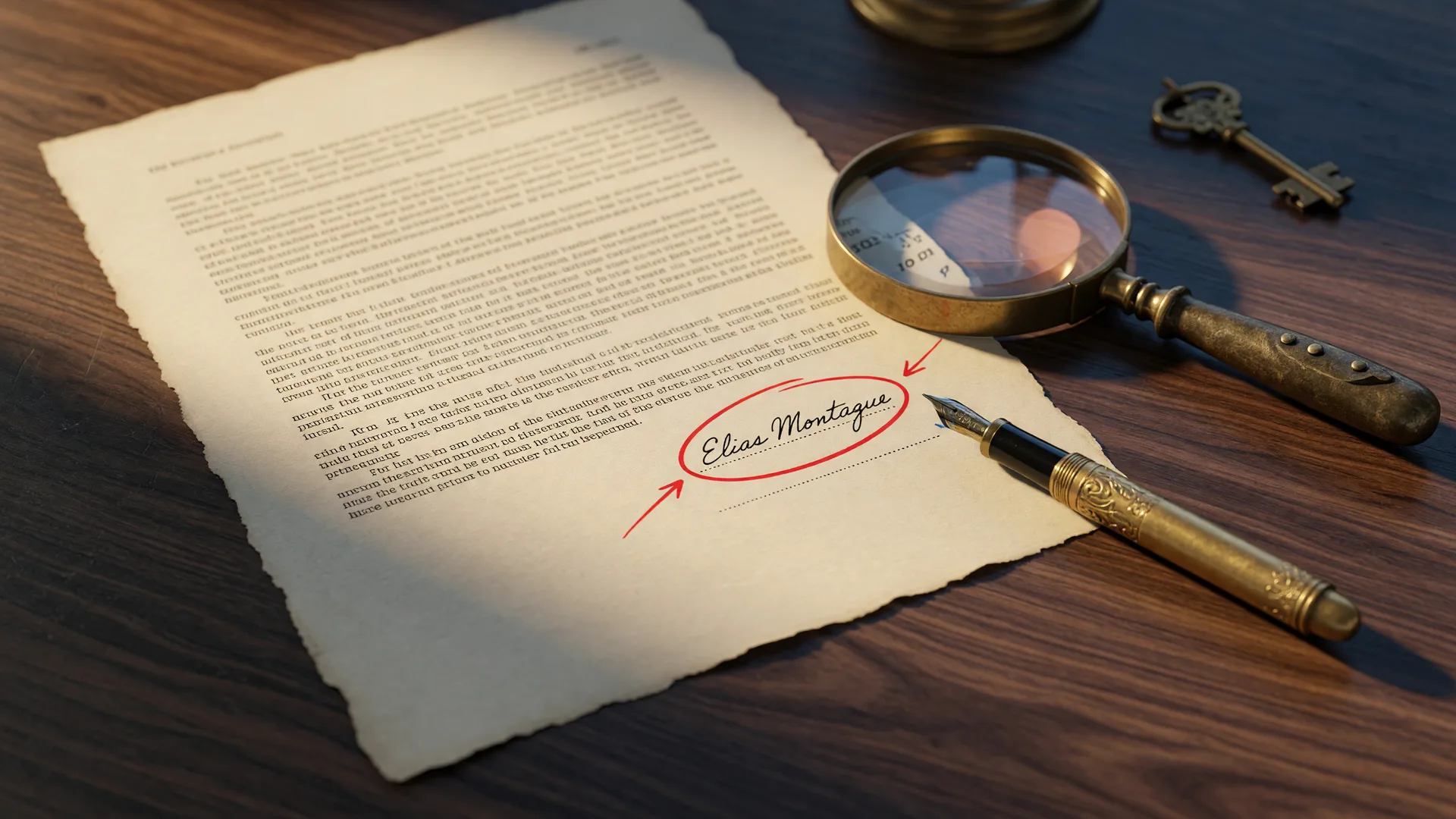
Title examiners trace ownership through recorded documents, and they search public records using the names they find. If the deed says "Micheal" but the owner's actual name is "Michael," a judgment, tax lien, or other claim recorded under the correct spelling can be missed when the records are searched, because the two versions don't match. That mismatch is exactly the kind of thing the industry calls a cloud on title: an ambiguity in the record that makes it unclear who owns the property or what claims attach to it.
An unresolved spelling error can show up at the next sale, the next refinance, or whenever anyone needs to rely on the ownership record. It doesn't go away on its own.
Why a Title Company Cares
A title company's job is to examine the public record, identify problems, and either clear them or insure against the ones that can't be cleared. A name that doesn't match across the chain of title is a problem the examiner will flag.
Examiners routinely search variations and aliases, "aka" names, to connect the same person across records that are spelled differently. But there are limits. When records genuinely can't be reconciled, the mismatch appears as a requirement, or exception, on the title commitment, and the lender, buyer, or title insurer almost always wants it cured before closing.
This is also one reason an early look at the records, such as a Property DNA Report before you list or make an offer, can save everyone time. Finding a spelling problem in week one is far cheaper than discovering it the week of closing.
Two Standard Ways to Fix a Recorded Deed
There are two common instruments, and they solve different problems. Using the wrong one can leave the error unresolved in the eyes of a title company.
Corrective Deed
A corrective deed, sometimes called a correction deed or scrivener's deed, is a new deed executed by the original grantor, the person who transferred the property. It references the original recorded document, states that it corrects a clerical error such as a misspelled name or a wrong legal description, and confirms the original terms. It is deliberately titled "Corrective Deed" so that lenders, title companies, and recorders can tell it apart from a brand new transfer.
That distinction matters. In some jurisdictions, recording what looks like a new conveyance can raise questions about a second transfer, title insurance coverage, or even property-tax reassessment. A properly labeled corrective deed is designed to avoid those consequences while making the record accurate.
Scrivener's Affidavit
A scrivener's affidavit, also called an affidavit of correction, is a sworn statement by the person who prepared the document. It explains the clerical error and states the correct information. It is typically used for technical defects: a misspelled name, an omitted "LLC" or "Inc.," a missing middle initial, a wrong date, or an error in the legal description prepared by the drafter.
The practical rule of thumb: a corrective deed fixes errors in the deed itself and is signed by the grantor. A scrivener's affidavit fixes drafting mistakes and is signed by the person who drafted the document, usually with a notary. Which instrument your title company, underwriter, or county will accept depends on the error and the local rules.
Some states have specific statutes and statutory forms for correction instruments, and some counties have their own recording requirements. There is no single national form, and requirements genuinely vary by state, county, and underwriter.
What Not to Do
The most common mistakes people make when they find a spelling error are also the most avoidable.
- Do not cross out the name and handwrite a correction on the original recorded deed. The recorded document is the record. Altering the original without a proper instrument creates a new problem and can raise questions about whether the document was modified after recording.
- Do not assume a quitclaim deed from the same person automatically cures it. A quitclaim conveys whatever interest the grantor has, and it can read like a separate transfer rather than a correction, which is why title companies usually prefer a properly titled corrective instrument. If you are tempted to use a quitclaim, read how quitclaims actually work first.
- Do not ignore the error hoping it won't matter. It will resurface at the next sale, refinance, or estate event, often at the most stressful possible moment.
- Do not record an affidavit that was not prepared to meet the state's requirements. A document that doesn't comply can add time instead of saving it.
Where It Gets Complicated
Simple errors are usually simple to fix. Some situations are more involved, and the time and cost go up from there:
- The original grantor is unavailable, uncooperative, or difficult to locate. Getting their signature, or finding a valid alternative under state law, can take weeks.
- The grantor has died. Correcting the deed may require action by their estate or heirs, which can pull probate and estate administration into the picture.
- A name change, such as a marriage or divorce, means the correct name at the time of the transfer has to be established, not just the spelling.
- Subsequent deeds were already recorded based on the misspelled document, so the correction has to line up with everything that came after it.
- The error is in the legal description rather than a name, or the description itself is ambiguous. Those can be more serious and sometimes require an attorney or, in extreme cases, a quiet title action.
Each of these adds steps, which is exactly why title companies prefer to find and fix these issues early.
Who Pays, and How Long Does It Take?
For a straightforward misspelling, the direct costs are usually modest: a notary fee, a recording fee at the county, and possibly a small charge for preparation or review. The cost that varies most is time, because it depends on getting the right person to sign the right document.
A quick correction with a cooperative grantor can be recorded within days. A correction that requires locating a former owner, working through an estate, or satisfying an underwriter's specific requirements can take weeks or longer. State law, the county recorder's office, the lender, and the title insurer all play a role, so nobody can honestly promise one universal timeline.
Why This Matters to Buyers, Sellers, and Agents
For a seller, the lesson is to review the deed style and the ownership record before listing, not after an offer arrives. For a buyer, the title search and examination during the transaction is the safety net, which is a large part of what a title company actually does. For an agent, knowing that name discrepancies are common and fixable means you can keep a transaction calm when the examiner flags one.
The broader point is that the recorded deed is a public document that other people will rely on for decades. Getting the names right is not bureaucracy for its own sake. It is what keeps the ownership record dependable, so a future buyer can be confident about who owns the property and what claims attach to it.
And if you are waiting on a title requirement right now, this is part of why the search takes the time it takes.
The Bottom Line
A misspelled name on a deed is common, fixable, and worth fixing properly. It does not mean the transfer was a fraud or that ownership is invalid. It means the record needs to be made accurate before anyone can safely rely on it.
If your title company asks for a corrective deed, a scrivener's affidavit, or any documentation about a name, ask what the specific requirement is and why. A good closing team will explain it plainly and help you work through it. In more complex situations, such as an estate, a disputing party, or an unclear legal description, an attorney who understands real property and local recording practice should be involved.
Questions about a deed, a title requirement, or an upcoming closing? Talk to our team, or start a title order and we'll take a look at the record with you.
Sources & Important Information
Background for this article draws on industry and professional sources including PropLogix's guide on correcting mistakes on recorded deeds, Deeds.com's explanation of correction deeds, Attorneys' Title Guaranty Fund's overview of scrivener's affidavits, and DeedClaim's comparison of corrective deeds and scrivener's affidavits.
Correction methods, statutory forms, notary requirements, and recording rules vary by state, county, title underwriter, lender, and transaction type. This article is general educational information and is not legal advice. If you have a name, description, or ownership question about a specific property, consult a qualified real estate attorney and your title or escrow team.