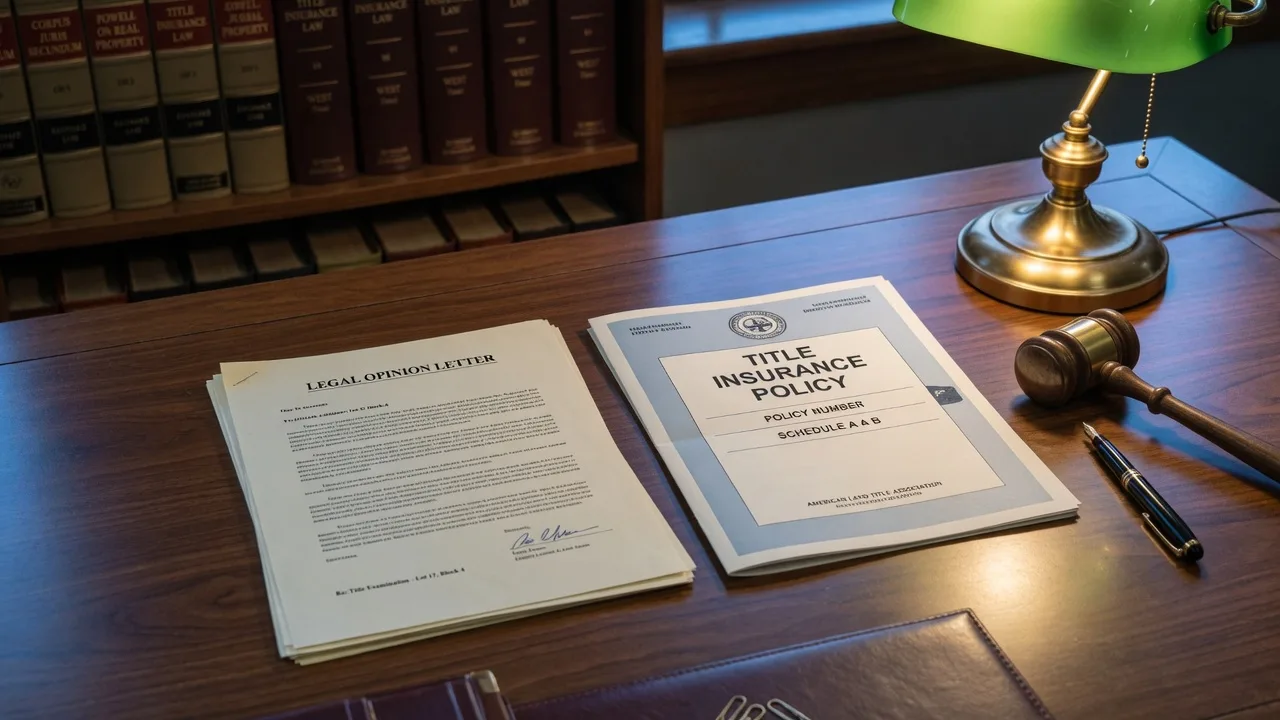
In some parts of the country, there is growing discussion about using attorney title opinion letters as an alternative to traditional title insurance.
The idea sounds appealing: an attorney reviews the title and issues a legal opinion. It may be cheaper than a title insurance policy, and it comes from a licensed attorney.
But an attorney opinion letter and a title insurance policy are fundamentally different products. Understanding the difference matters.
What an Attorney Opinion Letter Is
An attorney opinion letter is a legal document in which a lawyer states their professional opinion about the condition of a property's title.
The attorney reviews the publicly available records and opines on whether the seller has good title, whether any liens or encumbrances exist, and what the chain of ownership looks like.
The opinion is based on what the attorney found in the records at the time of the review. It's a snapshot of the public record.
What Title Insurance Is
Title insurance is an insurance contract. In exchange for a one-time premium, the insurer agrees to indemnify the insured against losses caused by covered title defects.
If a covered problem appears later, the insurer pays for the defense, and in many cases, for the loss itself.
The policy also covers certain risks that aren't visible in the public record at all, which is a critical difference.
The Key Differences
Here's where the two products diverge:
1. Ongoing Protection
An opinion letter speaks as of the date it was written. It's a snapshot.
Title insurance protects you for as long as you own the property, and sometimes longer. If a problem arises years later, the policy is still in force.
2. What's Covered
An opinion letter can only address what appears in the public records. It cannot cover risks that are invisible at the time of the review.
Title insurance can cover risks that aren't in the public record at all, including:
- Forged deeds or signatures in the chain of title.
- Undisclosed heirs who appear after the prior owner's death.
- Mistakes in public records, indexing errors, or omitted documents.
- Fraud, duress, or incapacity in a prior transfer.
- Deeds by minors or other parties who lacked legal capacity.
These are real risks. They happen more often than people realize.
3. Financial Backing
An opinion letter is backed by the attorney's professional liability insurance, if the attorney carries it. That coverage is generally limited, and it may not respond to every type of claim.
Title insurance is backed by the financial reserves of the title insurance underwriter, often a regulated insurance company with substantial assets and statutory reserve requirements.
4. Defense Obligation
If your title is challenged, an opinion letter doesn't obligate the attorney to defend you in court. The attorney's liability, if any, would be determined by a legal malpractice claim.
Title insurance generally includes a duty to defend the insured against covered claims. The insurer hires and pays for the lawyers, not you.
5. Lender Acceptance
Most lenders will not accept an attorney opinion letter in place of a lender's title insurance policy. The secondary mortgage market, including Fannie Mae and Freddie Mac, has specific requirements that generally require a title insurance policy.
Why the Comparison Matters
The discussion around opinion letters is often driven by efforts to reduce closing costs, which is a legitimate goal. Real estate transactions are expensive, and every dollar matters.
But not all closing costs are equal. Some are administrative fees. Some are insurance premiums that protect you from risks that could wipe out your equity.
Title insurance is the latter. Choosing a cheaper option that doesn't cover the same risks isn't really saving money. It's trading protection for a lower price.
What Should You Do?
If your title company or lender offers the option of an attorney opinion letter, ask the right questions:
- What risks does this opinion letter cover, and what risks does it leave out?
- What happens if a title problem shows up that wasn't visible in the public records?
- Who pays for the legal defense if my title is challenged?
- How much financial backing is behind this opinion?
- What does the full title insurance policy cover that the opinion letter doesn't?
The answers will help you decide whether the lower upfront cost is worth the gap in protection.
The Bottom Line
An attorney opinion letter is not the same as title insurance. They serve different purposes, cover different risks, and offer different levels of protection.
Both have their place. But a consumer who is offered an opinion letter as a replacement for title insurance should understand exactly what they're giving up.
In most cases, the one-time premium for title insurance is a small price for a lifetime of protection against risks you can't see.
This article provides general educational information and is not legal advice. Title insurance coverage, attorney opinion letters, and their respective risks vary by state, transaction, and the specific documents involved. Consult a licensed attorney or title professional for guidance on your situation.