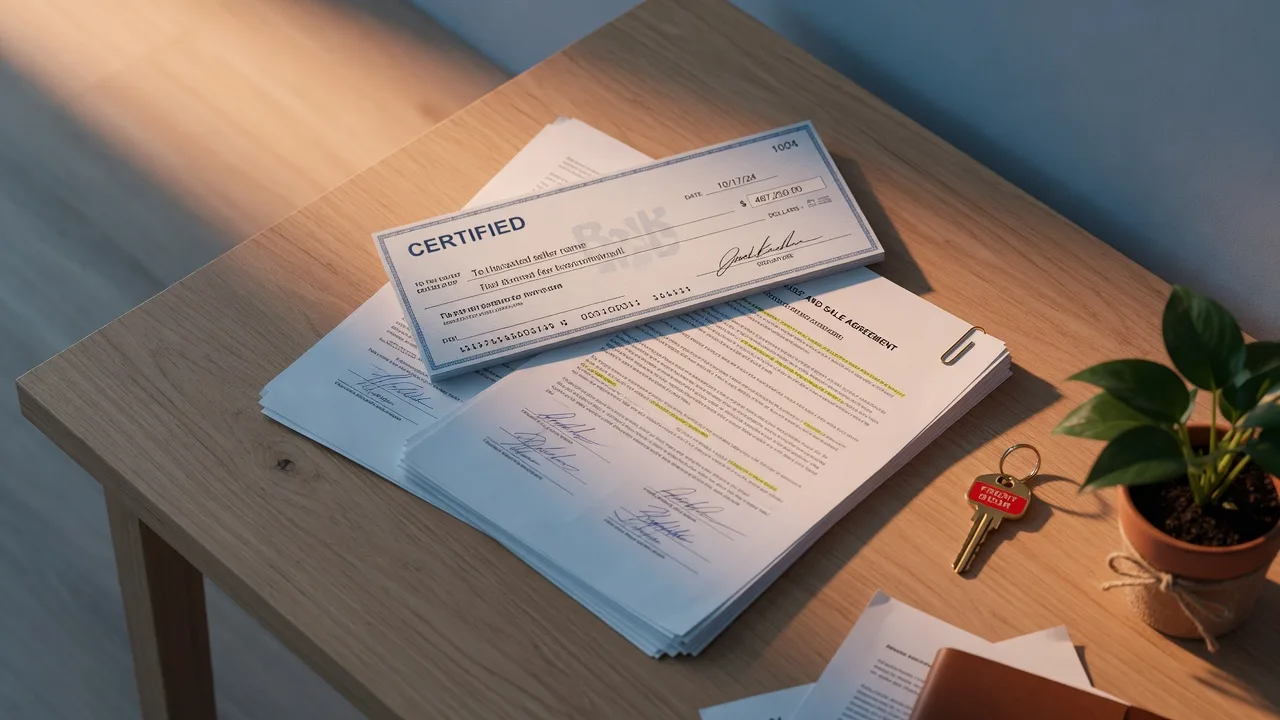
At some point in a real estate transaction, you may be asked to send a very large amount of money to a title or escrow company.
Then you wait.
It's natural to wonder: what is escrow, and why is someone else holding my money?
Escrow Is a Neutral Middle Ground
Escrow is a simple but powerful idea: a neutral third party holds the money, the documents, and the instructions until the conditions of the transaction are met.
The buyer doesn't hand the money directly to the seller. The seller doesn't hand the deed directly to the buyer. Instead, both sides deposit what they owe into escrow, and the escrow officer makes sure everything is completed before anything is released.
The title or escrow company is the referee, not a player. They don't take sides. They follow the written escrow instructions and the contract.
What Actually Sits in Escrow
During a typical purchase, escrow holds:
- The buyer's earnest money deposit.
- The buyer's remaining down payment and closing funds.
- The seller's signed deed.
- Signed loan documents from the buyer.
- Payoff demands from the seller's lenders.
- Utility, HOA, tax, and other proration information.
- The closing statement, which accounts for every dollar.
All of it sits together until the conditions are satisfied.
Why Doesn't the Seller Get the Money Immediately?
Because the sale isn't done yet.
The lender may still need to verify conditions. The deed may not be recorded. Payoffs may not be final. The seller's obligations, like delivering clear title, may not be confirmed.
The escrow officer's job is to make sure every requirement is checked off before funds move. That protects both sides.
Releasing money too early is how transactions go wrong. Holding it until the conditions are met is how closings go right.
Where Does the Money Go While It's Held?
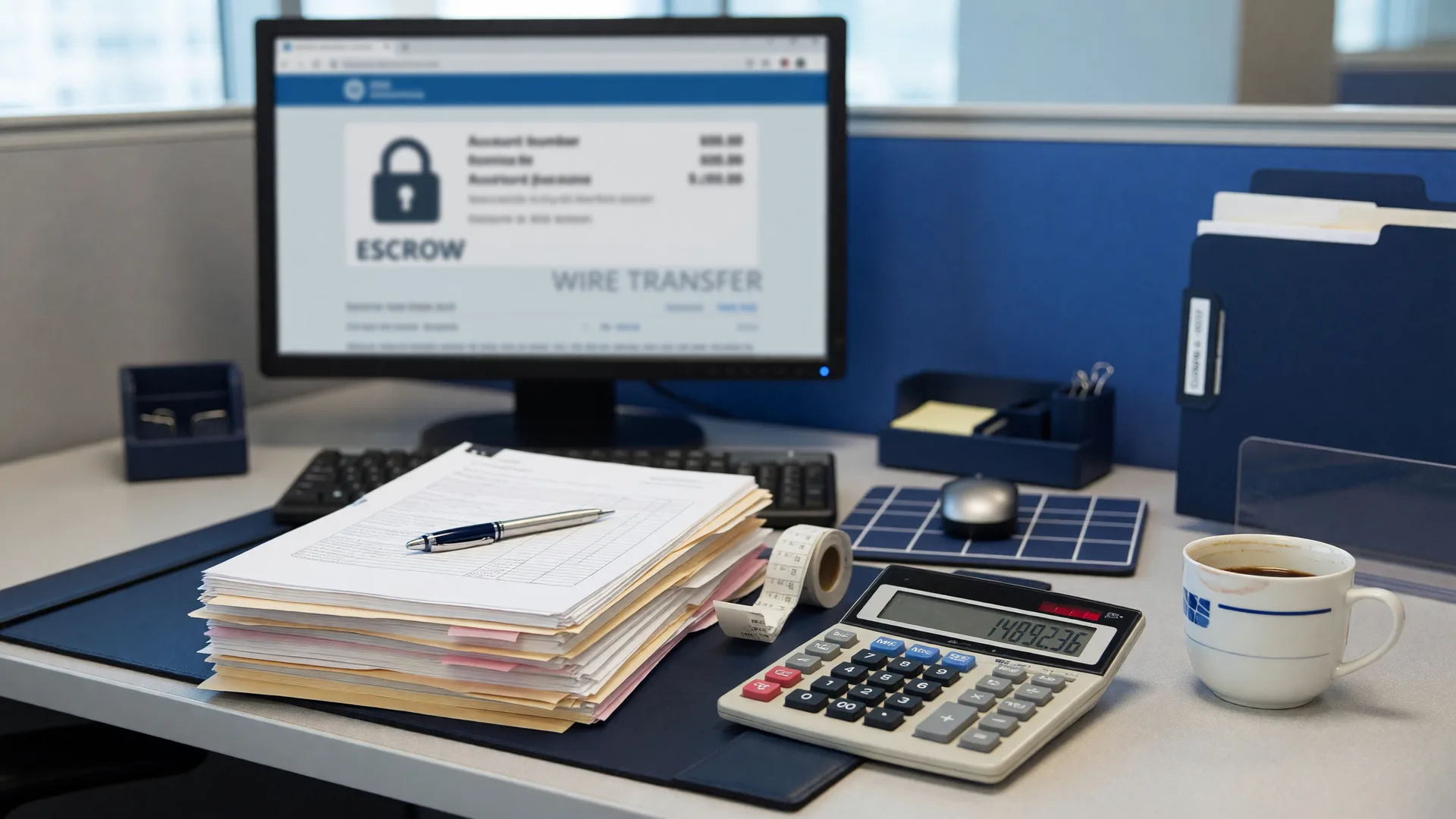
Funds held in escrow go into a dedicated escrow or trust account, not the company's operating account.
These accounts are subject to strict rules and are often audited. The money is not the title company's to spend. It belongs to the parties in the transaction, and it must be accounted for separately.
If you're ever asked to wire closing funds, verify the wiring instructions by phone using a number you know is correct. Wire fraud is one of the most common scams in real estate, and criminals love the escrow moment. Our article on real estate wire fraud explains how to protect yourself.
What Happens at Closing
When everything is ready, the escrow officer disburses the funds according to the closing statement:
- Paying off the seller's existing mortgages and liens.
- Paying taxes, recording fees, and other closing costs.
- Paying real estate commissions.
- Sending the seller their net proceeds.
The deed is recorded with the county, ownership officially transfers, and the transaction is complete.
What If the Deal Falls Through?
If the transaction doesn't close, the escrow officer doesn't simply pick a winner.
The contract and the escrow instructions determine what happens to the funds. In many cases, the parties sign a mutual release agreeing on how to handle the deposit. If they can't agree, the funds may stay in escrow until the dispute is resolved, sometimes by a court.
That's another reason escrow exists: so nobody can unilaterally grab the money when things go sideways.
Escrow Is Your Protection, Not an Inconvenience
It can feel strange to hand a large sum to a company you barely know.
But the alternative is worse. Without a neutral party holding funds and documents, either the buyer or the seller would have to trust the other side completely, with hundreds of thousands of dollars on the line.
Escrow is the mechanism that makes that trust unnecessary.
The money is held safely, the conditions are verified, and at the end, everyone gets exactly what they were promised.
This article provides general educational information and is not legal or financial advice. Escrow practices, regulations, and account rules vary by state. Ask your title or escrow professional about how escrow works in your transaction.