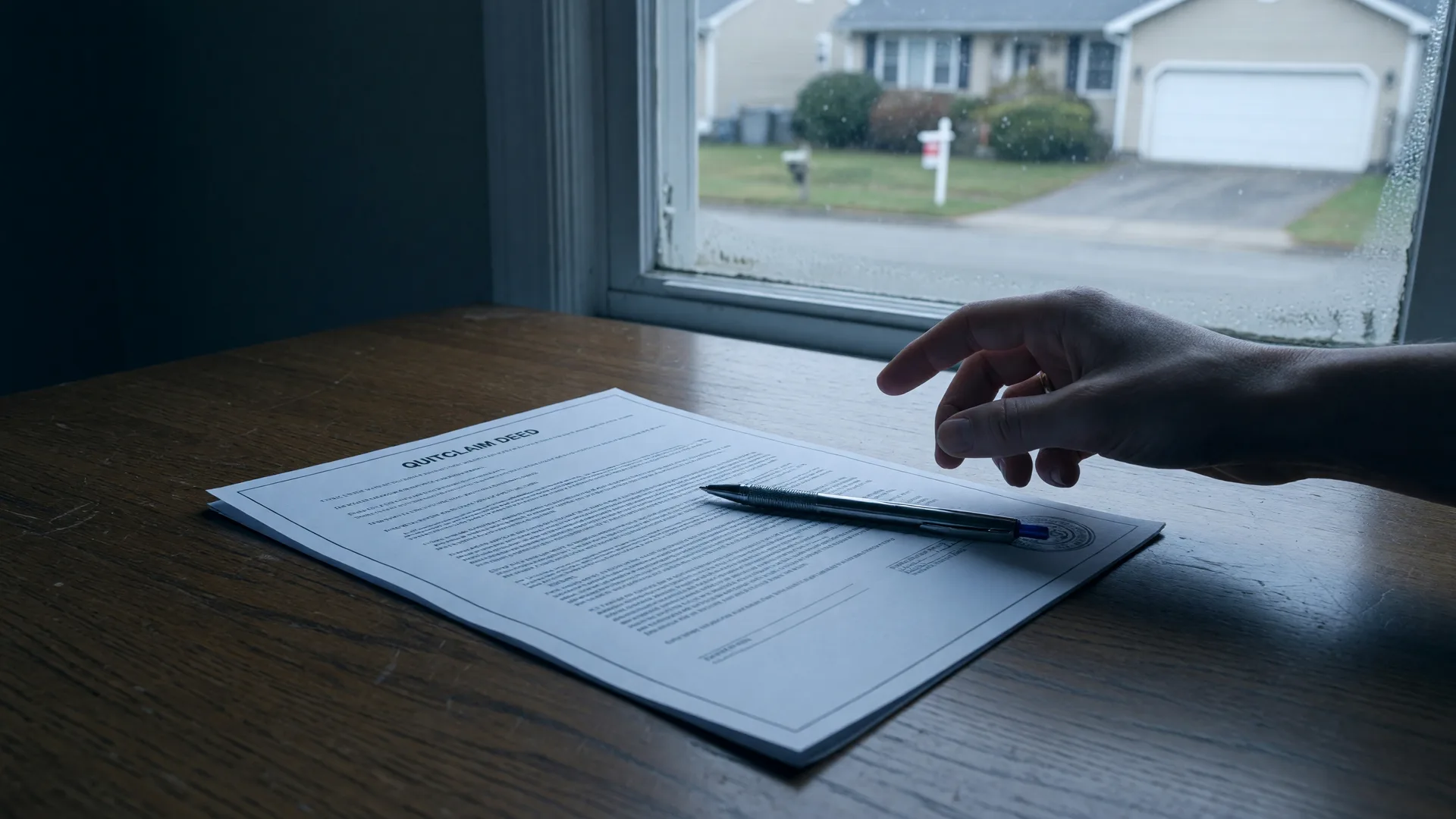
When a homeowner dies, the mortgage does not disappear.
The loan remains attached to the house as a lien, and someone has to keep paying it, or the lender can eventually foreclose. But under a 1982 federal law, the Garn-St. Germain Depository Institutions Act, a lender generally cannot call the loan due just because the home passed to a relative after the borrower's death.
That means a surviving spouse, child, or other relative can often keep the deceased borrower's original interest rate, remaining term, and payment schedule, without refinancing or re-qualifying. With the average 30-year mortgage rate at 7.28% this week, an inherited loan at a lower rate can be one of the most valuable assets a family owns. Here is how it works, and where the title paperwork fits in.
The Mortgage Is a Lien, Not a Promise That Dies With the Borrower
A home loan is really two things. The note is the borrower's personal promise to repay. The mortgage or deed of trust is the lien that makes the house the collateral for that promise.
When the borrower dies, the note does not simply vanish. The lien stays on the property, and the debt must be handled by the estate, the heirs, or the sale of the home.
Here is the part many heirs misunderstand: an heir is not automatically personally responsible for the debt just because they inherited the house. But the house itself remains collateral. If nobody pays, the lender can foreclose, and the family can lose the equity that took decades to build.
What Garn-St. Germain Actually Protects
Most mortgages contain a due-on-sale clause, which lets the lender demand full repayment if the property is sold or transferred. Federal law generally allows lenders to enforce those clauses.
But the Garn-St. Germain Depository Institutions Act of 1982, codified at 12 U.S.C. Section 1701j-3, lists transfers on which a lender may not call the loan due. The list includes "a transfer to a relative resulting from the death of a borrower," transfers by devise, descent, or operation of law on the death of a joint tenant or tenant by the entirety, and transfers where a spouse or children of the borrower become owners of the property.
What that means in practice: when a homeowner dies and the house passes to a relative by will, trust, or intestate succession, the lender cannot demand immediate full repayment or foreclose simply because of the transfer. The heir may assume the existing loan and keep paying under the original terms, without refinancing and without re-qualifying.
Why this matters right now: today's average 30-year rate is 7.28%. An inherited loan at the deceased borrower's rate, which may be far below that, can be worth tens of thousands of dollars over the life of the mortgage. Losing it to a foreclosure or an avoidable refinance is a costly mistake.
What Heirs Should Do First
- Notify the mortgage servicer promptly. Send the death certificate and proof of your right to the property, such as a probate order, letters of administration, trust documents, or an affidavit of death for joint tenancy.
- Keep making payments. If the estate cannot make them, talk to the servicer about the options before the loan falls into default. A foreclosure moves much faster than most families expect.
- Decide whether to keep, sell, or rent the home. If you sell, the loan is paid from the proceeds and the remaining equity goes to the estate or the heirs.
- Get the deed properly transferred and recorded. This is where the title company comes in.
The Title Side: Why the Paperwork Matters
The deceased owner's name stays on the title until a proper instrument is recorded: a probate order, an affidavit of death (common when the property was held in joint tenancy), or a trustee's deed from a trust. Until that happens, the public records still show the deceased person as the owner.
That creates a gap in the chain of title, and gaps have a way of surfacing years later. When an heir eventually sells, the title company must prove the heir actually became the owner. If the death transfer was never recorded, or the paperwork was lost, the closing team has to reconstruct the ownership history, which takes time and can require additional documents or even a quiet title action.
Title companies also look at what the deceased owner left behind: unreleased old mortgages, unpaid contractor liens, judgment liens, property tax bills that went to the estate, and sometimes claims from family members who were not on the deed. An owner's title insurance policy in the heir's own name protects against title defects that predate the inheritance, and it is one of the least expensive ways to protect the family's largest asset.
And do not forget the ongoing costs: property taxes and HOA assessments keep accruing after death. The estate or the heirs must stay current, or those become liens too.
When the Protection Doesn't Apply
The Garn-St. Germain protection is not unlimited. It applies to transfers to relatives on death. A transfer to a non-relative, such as a friend, a buyer, or an entity, can trigger the due-on-sale clause, and the lender can demand full payoff.
A few other things to know:
- If an heir formally assumes the loan, they become personally liable for the debt. Before assuming, make sure the numbers work.
- If nobody pays, the lender can foreclose, and the heirs can lose the equity. The house protects the loan, not the other way around.
- If the heir does not want the home, selling is usually the cleanest exit. The sale pays off the mortgage and any liens, and the remainder goes to the estate or the heirs.
- Loan type matters. FHA and VA loans have their own assumption rules, and servicer practices vary. Ask your servicer for the specifics of your loan.
A Real-Life Transaction Problem
Here is a version of a situation title professionals see regularly. A parent dies, and the adult children assume the house is simply theirs. Nobody tells the lender. Nobody records the deed. The mortgage payments stop, or the servicer is never notified, and two years later one child wants to sell. The title company finds the parent's name still on title, a mortgage that was never addressed, and property tax notices still going to the estate.
None of this is unfixable, but it is all avoidable. A few phone calls and a properly recorded deed in the first months after a death save families thousands of dollars and months of delay.
Real estate agents and investors should ask about ownership and financing on any inherited property before marketing it. The person who answers the phone may not be the person with legal authority to sign, and the mortgage situation determines what is actually possible with the sale.
A Checklist for Heirs
- Order several certified copies of the death certificate.
- Notify the mortgage servicer and ask what documents they need.
- Keep making payments, or arrange a plan with the servicer.
- Confirm who legally owns the property now, and get the deed recorded in the right names.
- Check for other liens: property taxes, HOA assessments, second mortgages, contractor liens, judgments.
- Consider an owner's title insurance policy in the heirs' names before relying on the property.
- Talk to an attorney about probate, estate tax, and the best way to hold the property.
The Bottom Line
The mortgage does not die with the borrower, but neither does the family's right to keep it. Federal law protects transfers to relatives on death, which means heirs can often hold onto an interest rate that is far better than anything available today. The paperwork, the payments, and the title work just need to be handled deliberately, and early.
Sources & Important Information
This article references the Garn-St. Germain Depository Institutions Act of 1982, 12 U.S.C. Section 1701j-3, which governs when lenders may enforce due-on-sale clauses. The current average 30-year fixed mortgage rate of 7.28% is from Freddie Mac's Primary Mortgage Market Survey for the week ending October 1, 2026.
State law governs probate, estate administration, and how title passes after death, and it varies by state. Loan documents, servicer policies, and loan type (including FHA and VA loans) can change how these rules apply. This article is general educational information and is not legal advice. Consult an attorney for your specific situation.