Most people think of property research as something buyers and sellers need.
We think renters should be doing it too.
Especially when you're renting from a private individual, entering into a sublease, or dealing with someone who isn't clearly connected to an established property management company or real estate brokerage.
Because one of the simplest questions in a rental transaction is also one of the most important:
Does the person asking you for money actually have the right to rent this property to you?
That sounds obvious.
Unfortunately, rental scams happen every day.
Sometimes the Property Is Completely Real
One of the most dangerous misconceptions about rental fraud is that the fake listing must involve a fake property.
It doesn't.
Scammers can copy a real rental listing, including photographs, descriptions and property details, and replace the legitimate contact information with their own.
That means you can:
- See a real house.
- See real photographs.
- Find the same address online.
- And still be talking to the wrong person.
That's exactly why verifying the property isn't enough.
You also need to verify the person and the listing.
A Property DNA Report Can Help Verify the Listing
This is particularly useful for renters.
When available listing information shows that the property is actively listed for rent, a Property DNA Report can identify the listing and listing agent and provide the agent's phone number.
That's an extremely useful fraud-prevention tool.
Imagine someone contacts you through Facebook Marketplace, Craigslist, social media or another website and claims they're authorized to rent you a property.
You pull a Property DNA Report.
The property really is listed for rent.
But the DNA Report identifies a professional listing agent and gives you that agent's telephone number.
Call the listing agent.
Ask:
"I'm considering renting this property and I'm dealing with someone who says they're authorized to rent it. Can you verify that for me?"
That telephone call could potentially prevent thousands of dollars from being sent to a scammer.
Start With Ownership
A Viking Property DNA Report can also help identify ownership information associated with a property.
Before handing someone thousands of dollars for a security deposit, advance rent or other rental costs, compare that information with the person claiming to be the landlord.
If someone tells you:
"I own the house."
But available property records identify someone completely different, stop.
That doesn't automatically mean it's fraud.
There may be a legitimate explanation.
The property could be held in a trust or business entity.
A property manager may be acting for the owner.
An authorized family member may be handling the rental.
An owner may have recently acquired the property and records may not yet reflect the change.
But it's absolutely a reason to ask:
"What gives you the authority to rent this property to me?"
What About a Sublease?
This becomes even more important with subleases.
Someone may legitimately occupy a property without owning it.
But simply living somewhere doesn't necessarily give that person the right to rent it to someone else.
If you're considering a sublease, you may want to determine:
- Who owns the property?
- Who is the actual tenant?
- Does the lease allow subleasing?
- Has the landlord or property manager approved it?
- Is the person collecting your money actually authorized to do so?
Don't assume the person with the keys automatically has the legal right to rent you the property.
What If a Family Member Is Handling the Property?
Here's another situation worth checking.
Imagine someone tells you:
"My uncle owned this house. He passed away, and I'm renting it now."
Maybe that's completely legitimate.
Maybe that person inherited the property.
Maybe they're the trustee, personal representative or authorized agent.
Or maybe they're simply a relative who has access to the house and no legal authority whatsoever to collect rent.
Property ownership after a death can involve estates, trusts, probate and multiple heirs.
If the situation doesn't make sense, verify it before handing over money.
Property Managers Should Verify Ownership Too
This isn't only about renters.
If you're a property manager and someone approaches you saying:
"I own this property and want your company to manage it."
You should know whether that's actually true.
Before entering into a management agreement, available ownership information can help confirm that the person hiring you appears to own the property or has authority to act for the owner.
A Property DNA Report can provide an easy first layer of verification.
Because discovering later that your "client" never owned the property creates an entirely different kind of problem.
Look Beyond the Name
Ownership and listing verification are only parts of what a Property DNA Report can show.
Depending on the property and available data, it can also provide information such as:
- Legal description
- Property taxes
- Recent ownership history
- Recorded financing
- Certain voluntary and involuntary liens
- Property characteristics
- Estimated rental information
- Other available property and market data
For renters, some of that is simply useful context.
For example, knowing the approximate rental market can help you determine whether the advertised rent seems unusually low compared with the surrounding market.
And unusually attractive pricing combined with pressure to send money immediately should make you slow down.
"Hurry or You'll Lose It" Is a Red Flag
Rental scammers know competitive markets create fear.
They use it.
- "There are five other applicants."
- "I need the deposit today."
- "Someone else is ready to take it."
- "If you don't send the money now, I'll give it to someone else."
Sometimes legitimate landlords really do have multiple applicants.
But pressure is also a classic tool scammers use to keep you from slowing down long enough to verify what you're being told.
A good rental isn't worth abandoning basic verification.
Verify the Person Independently
If you're dealing with a private landlord, don't rely exclusively on the information they give you.
Compare ownership records.
Search the property address independently.
Look for other rental listings.
Compare the listing information.
If your DNA Report identifies a listing agent, call that agent using the contact information provided in the report.
If the property appears in multiple places with different contact information, stop and investigate.
If a property management company is involved, independently locate that company's official contact information rather than relying exclusively on information sent to you by the person requesting money.
A Driver's License Isn't Enough
Someone showing you an ID can feel reassuring.
But identity documents can be stolen, copied or altered.
Even knowing someone's real name doesn't necessarily prove they own the property they're offering to rent.
Verification works best when multiple pieces fit together:
- The person.
- The property.
- The owner.
- The listing.
- The listing agent or property manager.
- The lease.
- The payment instructions.
When those pieces don't line up, ask why.
Don't Send Money Until It Makes Sense
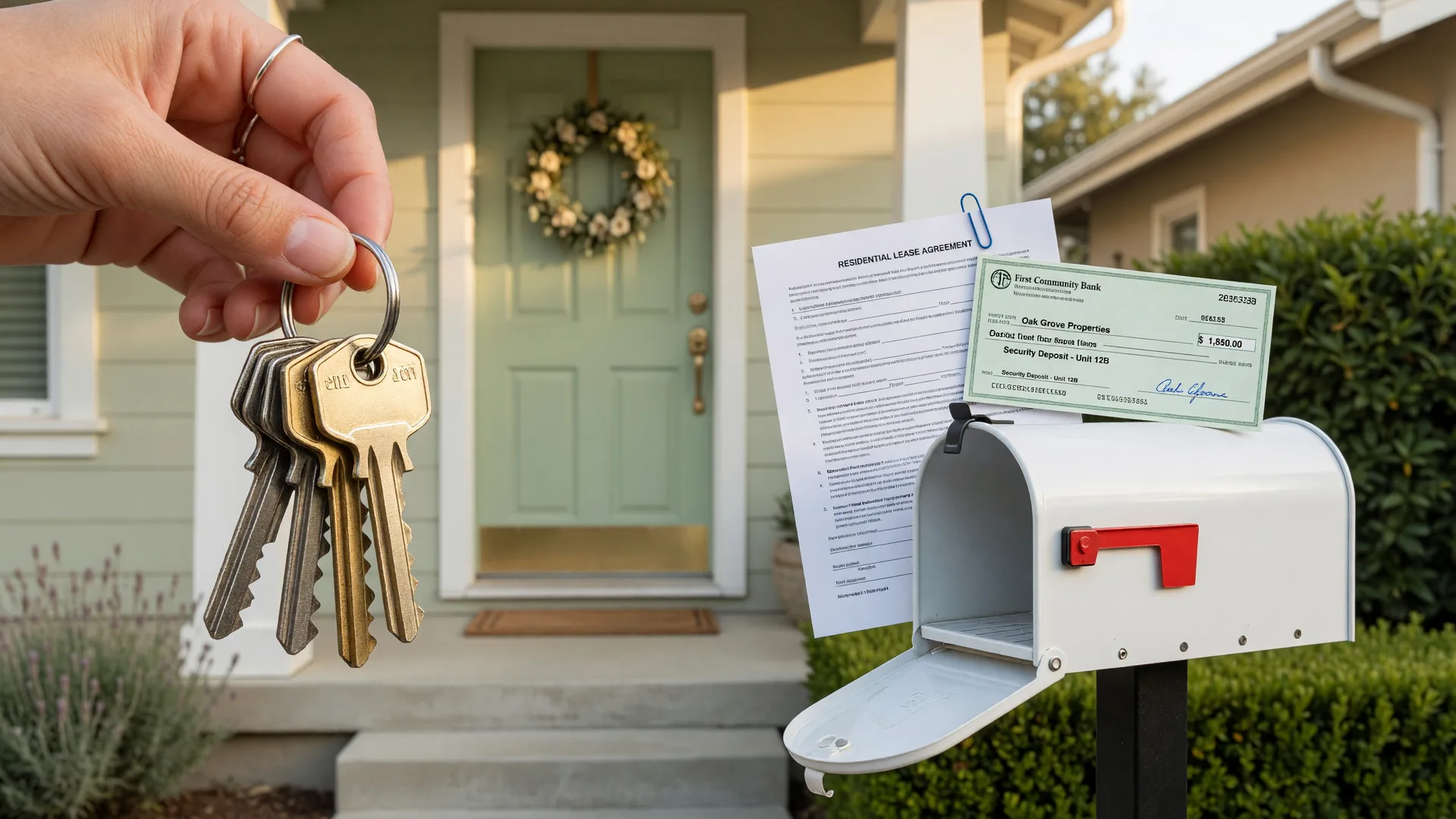
A security deposit plus first month's rent can easily mean thousands of dollars.
In expensive markets, it can be much more.
Before sending that money, make sure you understand who is receiving it and why they have the authority to receive it.
A few minutes of research is considerably easier than trying to recover a fraudulent payment after the scammer disappears.
Viking Will Help You Verify
This is one area where we're happy to help.
If a Property DNA Report raises a question and you're not sure whether the person offering the property is actually connected to the owner, reach out to us.
If additional research is appropriate, Viking may also be able to help with available ownership, contact or business-entity research.
We're more than happy to help someone verify what they're looking at rather than watch a fraudster walk away with a renter's money.
And frankly, if helping someone avoid a rental scam means that years from now, when that renter is ready to become a homeowner, they remember the title company that helped them?
We think that's a pretty good investment.
Property DNA Isn't Just for People Buying Property
A renter may never appear on the deed.
But they're still making a major financial decision.
They're still handing someone money.
They're still signing a contract.
And they still deserve to know whether the person on the other side of that transaction appears to have the right to offer the property for rent.
Before you send the deposit:
Verify the property.
Verify the owner.
Verify the listing.
Verify who you're paying.
And if those things don't line up?
Stop and investigate before you send a dollar.
Property DNA Reports are informational products based on available data and are not legal opinions, guarantees of ownership, lease-validity determinations or representations that a particular person has authority to rent or manage a property. Ownership and authority can involve trusts, entities, agency relationships, leases, estates and other circumstances requiring additional verification.