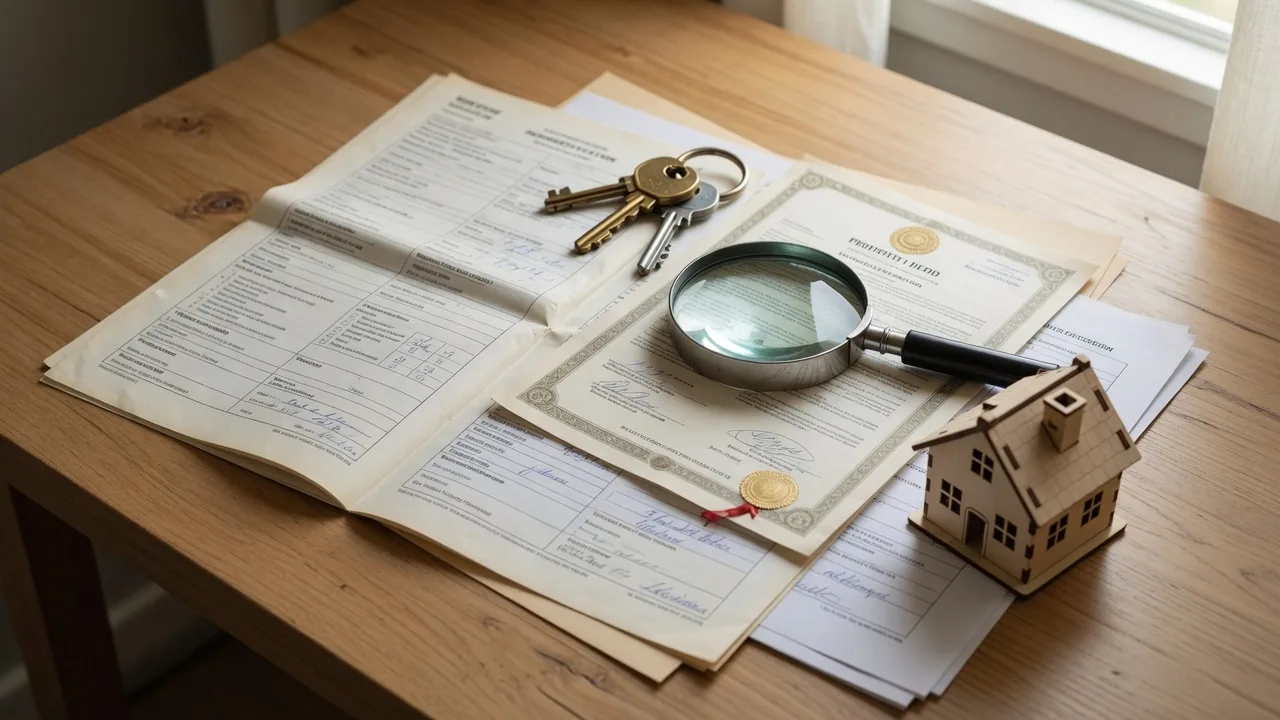
If we were buying a house, we'd want a Property DNA Report before making the offer.
Not after inspection.
Not three weeks into escrow.
Before deciding what the property is worth to us and how we want to structure the offer.
Why?
Because information changes strategy.
You Know What the House Looks Like. What Do the Records Say?
A showing tells you whether you like the kitchen.
A Property DNA Report can tell you something very different.
Depending on available information, it may provide insight into:
- Ownership
- Legal description
- Property taxes
- Prior transfers
- Recorded financing
- Potential voluntary and involuntary liens
- Comparable properties
- Estimated value
- Rental-market information
- Investment potential
- Market information
- Other available property data
That's a very different picture than what you'll get walking through the house.
Who Actually Owns It?
This sounds obvious.
But before making an offer, we'd want to know who available property records identify as the owner.
Does that information appear consistent with the seller?
Are there multiple owners?
Is a trust involved?
Does something look unusual enough that it's worth asking a question?
A Property DNA Report isn't a substitute for the formal title work performed during a transaction.
But an early look can identify questions worth asking before you're emotionally and financially committed.
Is the Seller Showing Signs of Financial Distress?
A DNA Report may identify recorded matters that suggest financial distress, including certain involuntary liens or foreclosure-related information where available.
That isn't a reason to take advantage of somebody.
But it is relevant information when structuring a transaction.
A seller facing financial pressure may care about things differently than another seller.
Perhaps certainty matters more than squeezing out the last dollar.
Perhaps timing matters.
Perhaps a faster closing would genuinely help them.
Perhaps the seller can't accept the offer you're considering because liens and other obligations affect how much money is needed to complete the transaction.
Knowing more allows your agent to develop a better negotiating strategy.
Involuntary Liens Can Tell You Something Important
Tax liens, HOA liens, judgments, mechanics liens and other recorded claims can potentially affect a property.
Finding one doesn't necessarily mean the transaction can't happen.
Many liens are routinely addressed through the closing process.
And sometimes recorded information needs additional investigation.
But wouldn't you rather know there may be an issue before writing the offer?
Here's the One Buyers Really Need to Look For: Existing Financing
This could be huge.
A DNA Report may identify recorded financing against the property.
If the seller has qualifying FHA, VA or other assumable financing, you may want to investigate whether assumption is possible.
Consider the difference.
Suppose a seller financed their home during the period when mortgage rates were historically low.
Instead of obtaining an entirely new mortgage at today's rates, could a qualified buyer potentially assume that existing lower-rate loan and address the seller's remaining equity separately?
Depending on the loan balance, rate, buyer qualifications and available cash or secondary financing, that could materially affect the economics of the purchase.
Loan assumptions have rules.
Not every loan is assumable.
Not every buyer qualifies.
And the existing lender or servicer needs to confirm the details.
But you can't ask about an opportunity you don't know exists.
Get Another Perspective on Value
Buyers hear a lot of opinions about what a house is worth.
The seller has an opinion.
The listing agent has an opinion.
Your agent has an opinion.
Eventually, if you're financing the property, an appraiser may have an opinion.
Property DNA can add another perspective through AI-generated comparable-property and valuation information.
We view that information as a data point, not a substitute for professional judgment or an appraisal.
But it is useful as another perspective.
If a property is listed at $1 million and available comparable-property data suggests something dramatically different, that doesn't automatically tell you the asking price is wrong.
It tells you to investigate.
Why is there such a difference?
Is the property substantially upgraded?
Is it unique?
Are the automated comps poor?
Or is the asking price simply aggressive?
Those are good questions for a buyer to ask.
The DNA Report Is a Neutral Information Source
Viking isn't trying to convince you to buy the house.
We're not representing the seller in negotiations.
We're not trying to justify the listing price.
The purpose of the Property DNA Report is to give you information.
What you and your real estate professional do with that information is up to you.
Investors Can Go Even Further
For investment properties, the report may include estimated rental information, market data and potential renovation/resale analysis.
Those numbers are estimates.
They aren't guarantees.
But they can help you decide whether a property deserves additional investigation before you spend significant time or money pursuing it.
What If It's Commercial?
Property DNA Reports can also be useful for commercial properties.
However, automated comparable sales and valuation estimates generally deserve additional caution with commercial real estate because commercial properties can vary enormously based on use, leases, income, zoning, improvements and other factors.
The ownership, recorded-document, legal-description and lien information can still provide useful early intelligence.
We'd Pull One Before Every Serious Offer
Buying real estate is too expensive to intentionally know less than you could.
If you're seriously considering a property, ask whether a Property DNA Report is available.
If you're working with a real estate professional, ask them about pulling one before you make an offer.
Then use it for what it is:
Another layer of information.
It doesn't replace your agent.
It doesn't replace an inspection.
It doesn't replace an appraisal.
And it certainly doesn't replace the formal title examination and title insurance process.
It helps you walk into those next steps knowing more than you did before.
And when you're making one of the largest purchases of your life, more useful information is a pretty good place to start.
Property DNA Reports are informational products and do not constitute a title examination, title commitment, title insurance policy, appraisal, legal advice, investment advice or guarantee of value, lien status, loan assumption eligibility, rental income or investment performance.