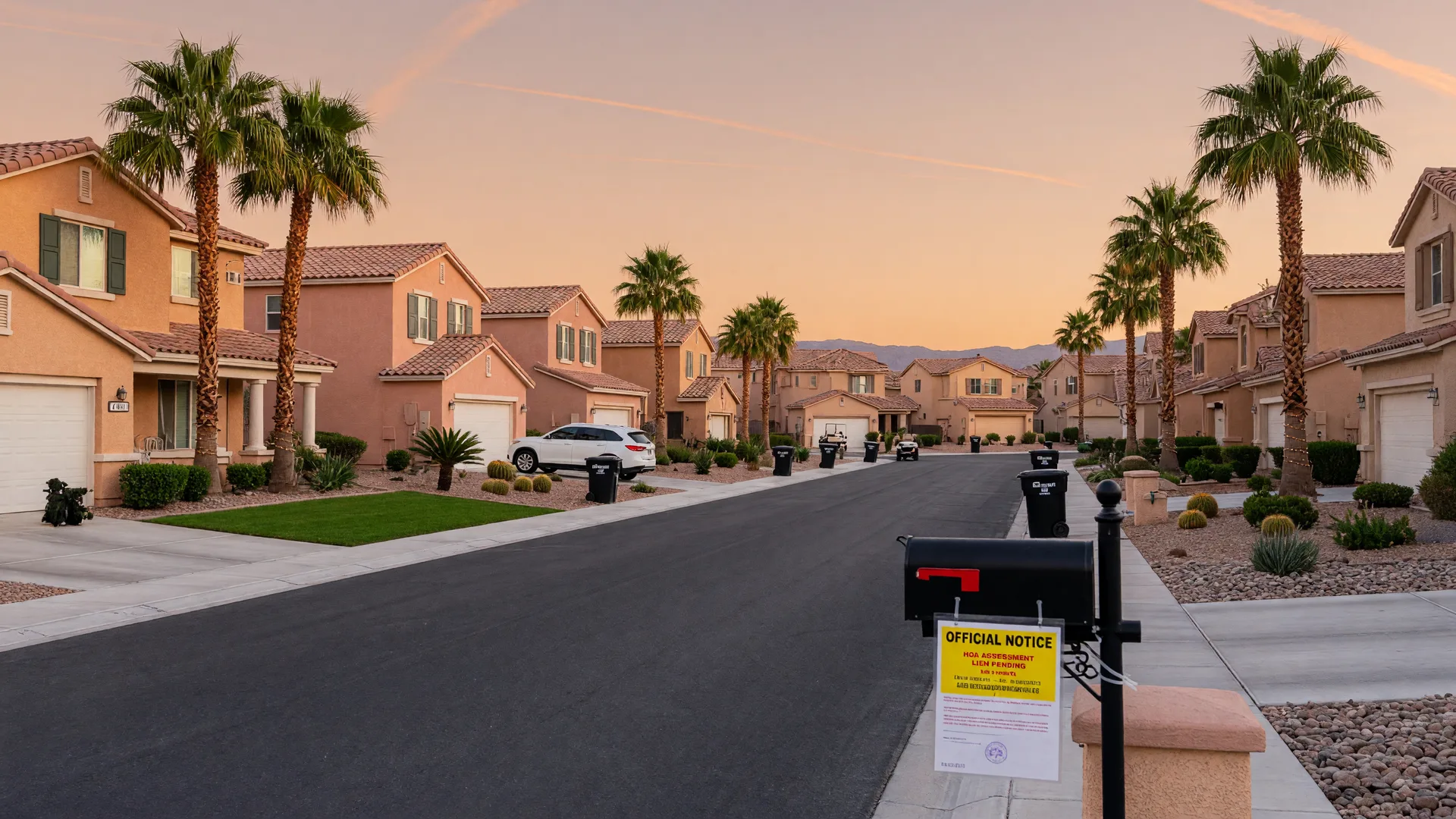
If you own a property in a Nevada homeowners association, ignoring unpaid HOA assessments can create a much bigger problem than late fees.
In Nevada, an HOA can have a statutory lien against property for unpaid assessments and certain related amounts.
And under circumstances permitted by Nevada law, that lien can ultimately be foreclosed.
That makes HOA delinquency something homeowners should take seriously.
This Isn't Just an Ordinary Collection Bill
People sometimes think of HOA dues like any other unpaid bill.
They're different because Nevada law gives an association statutory lien rights against the property itself.
That can ultimately include a foreclosure process if the statutory requirements are satisfied.
That doesn't mean an HOA takes someone's home the moment one assessment is late.
There are notices, deadlines and procedures.
But homeowners should not confuse "there is a process" with "this isn't serious."
Why Did Nevada HOA Foreclosures Become Such a Huge Issue?
Nevada's HOA lien laws have existed for years, but a major Nevada Supreme Court decision in 2014 dramatically clarified how powerful part of an HOA lien could be.
In SFR Investments Pool 1 v. U.S. Bank, the Nevada Supreme Court concluded that the superpriority portion of an HOA lien had priority over a first deed of trust and that a proper HOA foreclosure could extinguish that deed of trust.
That decision triggered years of litigation involving banks, investors, homeowners and HOAs.
The law has also evolved since then, so today's HOA foreclosure rules should not simply be assumed to operate exactly as they did during the foreclosure crisis.
What If You're Selling the Property?
An HOA lien doesn't automatically mean you can't sell.
Often the title company can identify the lien, obtain an updated payoff, collect the necessary amount through escrow, pay the association and obtain the documentation needed to clear the lien.
But the earlier we know about it, the better.
HOA payoff demands and collection files can take time to obtain.
Additional collection expenses may have accumulated.
And if foreclosure proceedings have advanced, the situation becomes more urgent.
Don't Assume the Amount Is Just the Missed HOA Payment
This surprises homeowners.
A relatively small delinquency can grow.
Depending on the circumstances and applicable law, additional amounts may include assessments, interest, collection expenses and other legally permitted charges.
That's another reason to address the problem early.
If You're Behind, Deal With It
If you're having trouble paying HOA assessments, communicate with the association or its collection representative.
If you're planning to sell, tell your title company.
If a Property DNA Report identifies an HOA lien you didn't know existed, investigate it.
And if an HOA foreclosure has already started, consider obtaining legal advice immediately.
The lesson is simple:
An HOA lien isn't something to throw in a drawer and deal with later.
In Nevada, it can affect your title.
It can complicate a sale.
And under circumstances permitted by law, it can ultimately lead to foreclosure.
This article provides general educational information regarding Nevada HOA liens and is not legal advice. Nevada HOA law has changed over time, and individual cases should be evaluated under current law.