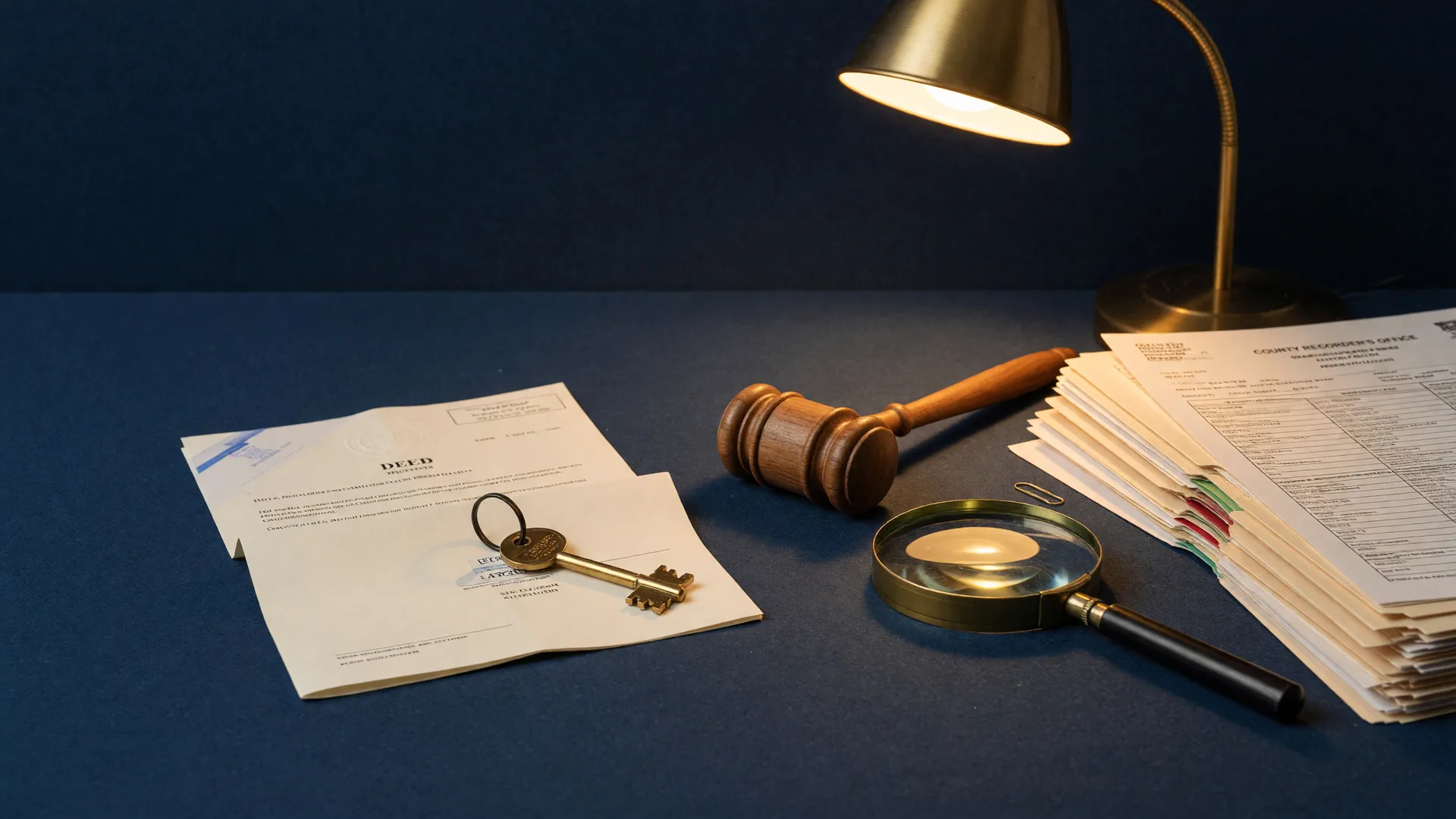
On October 1, 2026, two more states brought dedicated deed theft laws into effect: Alabama and Maryland. That brought the number of states with a specific statute aimed at deed fraud to 12, up from 7 at the start of the year, while 29 states still have no dedicated law on the books. If you own a home, this matters more than it sounds, because it tells you what the law now does for you, what it still does not do, and why the practical defenses against deed theft have almost nothing to do with which state you live in.
This article is a companion to our earlier explainer on how deed theft works, which covered the mechanics of forging and recording a deed. Here, the focus is the new legal landscape: what the wave of 2026 state laws actually does, where the gaps remain, and what still protects a homeowner when a forged deed is recorded. Every fact below carries its source in the Sources section, and nothing here is legal advice for a specific case.
Why States Are Passing These Laws Now
The push for dedicated deed theft statutes follows a sharp jump in seller impersonation fraud, the scheme where a criminal poses as the true owner to sell or refinance a property the criminal does not own. The American Land Title Association's 2026 Seller Impersonation Fraud Study, released September 14, 2026, surveyed 245 title professionals across 40 states, the District of Columbia, and the U.S. Virgin Islands. It found that 59% of title firms reported at least one seller impersonation fraud attempt in the prior year, up from 28% in the association's 2024 study, and that the share reporting an attempt in the prior month jumped from 19% to 45%.
The study also found the fraud is getting harder to spot. Criminals are using AI voice cloning and spoofed phone numbers to pass real-time verification, and they are broadening their targets beyond vacant, undeveloped land to absentee-owned homes. That is consistent with the FBI's Internet Crime Complaint Center warning issued June 16, 2026, which described criminals creating fake driver's licenses and passports, posing as vacant-parcel owners to real estate agents and title companies, drafting sale contracts, using fictitious deeds, and diverting the proceeds. When a criminal records a forged deed as part of that scheme, it becomes deed theft, and the public record itself is corrupted.
What the New Laws Actually Do
Alabama. The Alabama Property Protection Act of 2026, signed in April and effective October 1, takes the most aggressive approach of the new laws. It creates a new crime of aggravated fraudulent sale or lease of residential real property, a Class C felony, aimed squarely at seller impersonation. It establishes an administrative complaint process through the Alabama Securities Commission, which can investigate real estate conveyance fraud and can void or order the forfeiture of a fraudulent conveyance. It also strengthens notary requirements, which matters because a forged or improperly notarized deed is the most common vehicle for deed fraud, and it directs the commission to draft rules and forms for victims. The law was backed by the Alabama Bankers Association, the Alabama Land Title Association, the Southeast Land Title Association, and Alabama REALTORS.
Maryland. Maryland's Chapter 399 (House Bill 130), also effective October 1, makes deed fraud a crime by prohibiting the intentional fraudulent sale, conveyance, or lease, or attempted sale, conveyance, or lease, of real property by someone with no ownership interest, and fraudulent acquisition by deception, intimidation, threat, or undue influence. It creates a Deed Fraud Prevention Grant Fund to help victims and establishes a Task Force to Study Deed Fraud to review complaints, resolved cases, restitution, and geographic and demographic trends. Because part of the Maryland law is a study and grant program, how it is counted among states with dedicated laws depends on the tracker, which is worth knowing before you cite a specific total.
The wider field. Arizona's Senate Bill 1479 took effect September 12, 2026, and California and Virginia enacted their own statutes earlier in 2026, joining Texas and Oklahoma, the most active states over 2025 and 2026. The details differ by state, which is the first thing to remember: a deed theft law in one state does not tell you what the law does in yours.
What the New Laws Don't Do
The honest headline is this: almost all of these laws are reactive. They create criminal penalties, recovery paths, grant funds, and task forces, which is genuinely useful, but they mostly come into play after a forged deed has already been recorded. The EquityProtect Q3 2026 Property Protection Scorecard made the point plainly: most homeowner protections still work only after fraud occurs. A criminal statute does not stop a forged deed from being recorded on Monday, and a grant fund does not undo the damage while a thief is renting out your house.
Three gaps matter in particular. First, 29 states still have no dedicated deed theft statute, even though recording a forged deed is generally a crime everywhere under fraud and forgery law. Second, none of the new laws prevent recording itself: the county recorder still accepts documents, and in most states recording is ministerial, meaning the office verifies the format, not the identity of the person signing. Third, even where a law lets a victim void a fraudulent conveyance, the victim usually has to act, file, and often hire a lawyer, which is why a quiet title action remains one of the most common remedies for a forged deed.
The Preventive Idea Spreading Underneath: Owner Notification
The most interesting development this year is not a criminal statute at all. It is an early-warning system. On September 8, 2026, Fresno County, California adopted a Real Property Fraud Prevention Notice ordinance. Under the program, a property owner can record a notice in the county that requires title companies and notaries to verify a seller's or borrower's identity before a deed transfer or mortgage is recorded against that property. Roughly 4,500 owners had already signed up when the county announced it. The ordinance complements a prior state law that already authorizes the county recorder to mail property owners a notice within 30 days of a recorded deed, giving the true owner a chance to spot a fraudulent recording within weeks instead of years.
That is the model to watch. Owner notification does not block a fraudulent recording, but it turns a crime that used to go undiscovered for years into one that surfaces almost immediately, which is the single most important difference between recoverable and unrecoverable deed fraud. A handful of states and counties are experimenting with similar systems, and the direction of travel is clear: the laws are getting tougher on the criminals, and the prevention is moving toward alerting the owner.
What Homeowners Should Actually Do
- Sign up for recording alerts. In Nevada, Clark County's Recording Notification Service emails you whenever a document is recorded under a name or parcel number you register, and other Nevada counties run similar programs. The Recorders Association of Nevada recommends it as a first line of defense. Check whether your county recorder offers the same service, wherever you own property.
- Use a free or low-cost title monitoring service. Several national title companies offer monitoring that watches the public record and flags activity on your property. An alert is not insurance, but it is the difference between catching a forged deed in days and discovering it at your own closing years later.
- Keep an owner's title insurance policy. A standard owner's policy covers forgery, fraud, and impersonation for defects that existed before the policy date, and newer ALTA 49 and 49.1 endorsements add post-closing protection against forged deeds and forged mortgages. If you do not have an owner's policy, talk to a title professional about what one would cover.
- Treat identity verification at closing as protection, not a nuisance. Title companies now ask sellers to verify their identity precisely because seller impersonation doubled. That extra step is what keeps a stranger from walking into your closing.
- Check the public record periodically. County recorder websites let anyone search recorded documents by name or parcel number. A quick look a few times a year costs nothing.
- Act fast if something appears. If you get an alert about a document recorded against your home that you did not sign, treat it as an emergency. Contact your title insurer or a real estate attorney the same day, report it to local law enforcement and the FBI's IC3, and preserve every document.
What It Means for Agents and Lenders
For real estate agents, the spread of these laws and the ALTA study data are a reminder that the person on the other side of the transaction may not be the owner. The red flags are the same ones the industry has been teaching for years: vacant or absentee-owned properties, sellers who cannot answer basic questions about the property, out-of-state sellers moving fast, and pressure to close quickly. For lenders, a forged deed threatens the security of the loan itself, which is why underwriters care so much about a clean chain of title and why lenders require title insurance.
For title companies, the trend is visible in daily work. Fraud detection tools are now standard, and in the ALTA study 94% of firms said they used them and found them helpful, averaging 5.3 tools per firm. The reason is not bureaucracy. It is that a forged deed or an impersonated seller is exactly the kind of defect that a careful title search and identity verification are designed to catch before money moves.
The Bottom Line
Twelve states now have dedicated deed theft laws, up from seven at the start of 2026, and Alabama and Maryland took their new statutes live on October 1. That is real progress, but the laws are mostly reactive: they make deed fraud a specific crime, add recovery paths, and fund task forces, and they do little to stop a forged deed from being recorded in the first place. The prevention is still up to the owner, through recording alerts, title monitoring, an owner's title insurance policy, and quick action when something looks wrong.
The encouraging news is that the most effective defenses are free or inexpensive, and they work in every state, whether or not it has a dedicated deed theft statute. Register for your county's recording alerts, keep an eye on the record, and if you ever see a document against your home that you did not sign, treat it as the emergency it is. That is what separates a forgery you can fix from one that follows you for years.
Sources
Reports, Laws, and Alerts
- 12 states with dedicated deed theft laws as of October 1, 2026, up from 7; 29 states without: EquityProtect Q3 2026 Property Protection Scorecard, October 1, 2026, and HousingWire, October 5, 2026.
- ALTA 2026 Seller Impersonation Fraud Study (245 title professionals, 40 states, DC, and USVI; 59% of firms reported an attempt in the prior year, up from 28% in 2024; prior-month attempts up from 19% to 45%; AI voice cloning and spoofed phone numbers; 94% of firms use fraud-detection tools): American Land Title Association, September 15, 2026.
- FBI warning on parcel owner impersonation: FBI IC3 PSA 260616, June 16, 2026.
- Alabama Property Protection Act of 2026 (SB 292 / HB 426), effective October 1, 2026: Alabama Securities Commission.
- Maryland Chapter 399 (House Bill 130), deed fraud crime, Deed Fraud Prevention Grant Fund, and Task Force to Study Deed Fraud, effective October 1, 2026: Maryland General Assembly enrolled text.
- Fresno County, California, Real Property Fraud Prevention Notice ordinance, adopted September 8, 2026, with roughly 4,500 owners enrolled: The Business Journal and The Fresno Bee reporting, September 2026.
- Nevada recording alert services and protection guidance: Recorders Association of Nevada and the Clark County Recording Notification Service.
- Title insurance coverage: the ALTA Owner's Policy covers forgery, fraud, undue influence, and impersonation for defects existing before the policy date; the ALTA Homeowner's Policy includes post-policy forgery protection; ALTA 49 and 49.1 endorsements (2025) add post-closing forged-deed and forged-mortgage coverage: American Land Title Association.
This article is provided for general educational purposes and is not legal advice. Fraud patterns, state laws, and insurance coverages vary and change over time, and the resolution of any forged deed depends on the specific facts and the law of the jurisdiction where the property is located. Consult a qualified title professional, attorney, or law enforcement agency for guidance on your situation.