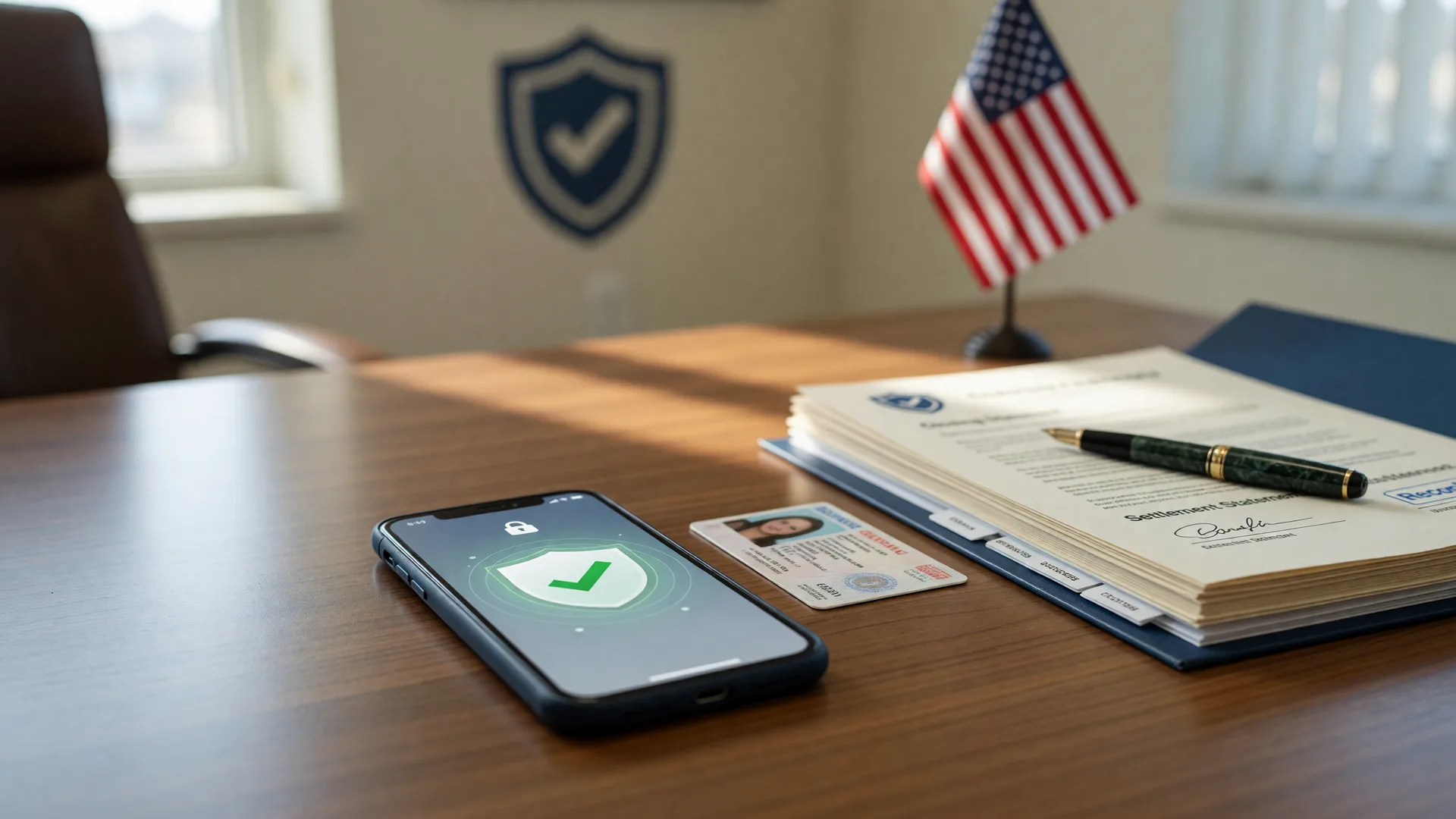
You sent your driver's license.
You've already spoken with your real estate agent.
Everyone knows you're the seller.
So why is the title or escrow company sending another link, asking you to scan an ID, take a photo, answer questions or complete another identity-verification step?
Because real estate fraud has changed.
Criminals Aren't Just Stealing Wire Instructions
One of the fastest-growing problems facing the title industry is seller impersonation fraud.
In these schemes, someone pretends to be the actual owner of real estate and attempts to sell or borrow against property that doesn't belong to them.
And this isn't merely a theoretical concern.
The American Land Title Association's 2026 Seller Impersonation Fraud Study surveyed 245 title professionals across 40 states, the District of Columbia and the U.S. Virgin Islands.
Fifty-nine percent of responding firms reported at least one seller impersonation fraud attempt during the prior calendar year. In ALTA's earlier 2024 study, that number was 28%.
That's Why Identity Verification Is Getting Stronger
The title industry is responding with additional layers of protection.
Depending on the transaction, company, underwriter and circumstances, those protections may include:
- Digital identity verification
- ID-document authentication
- Independently verifying phone numbers or contact information
- Knowledge-based authentication
- Multifactor authentication
- Additional verification of notaries or signing professionals
- Directly contacting property owners using independently verified information
ALTA updated its industry Best Practices guidance in 2025 to specifically address identity verification and impersonation fraud.
So when a closing company asks you to complete an extra security step, there may be a very good reason.
But What If Technology Isn't Easy for You?
This matters too.
Not everyone is comfortable scanning identification with a phone.
Not everyone has the newest smartphone.
Not everyone speaks English as a first language.
Some clients need additional assistance, and some transactions require a different verification approach.
Security shouldn't mean abandoning customer service.
If you're having difficulty completing an identity-verification requirement, call your title or escrow team. Explain the problem instead of simply ignoring the request.
There may be another compliant way to work through the issue depending on the transaction and the requirements involved.
Why Viking Takes It Seriously
A few extra minutes verifying someone's identity can feel inconvenient.
Discovering after closing that the person who signed the deed wasn't actually the property owner is considerably worse.
At Viking Title & Escrow, our job isn't simply to move documents from one person to another. It's to help get transactions closed while protecting the people, property and money involved.
If something in your closing process doesn't make sense — whether it's an identity-verification request, title requirement, lien, deed issue or escrow question — call us.
We would much rather explain why something is required than leave you wondering why you're being asked to do it.
Sources & Important Information
Industry information referenced in this article includes the American Land Title Association's 2026 Seller Impersonation Fraud Study and ALTA Best Practices materials regarding identity verification.
Specific verification procedures can vary by transaction, jurisdiction, title insurer, underwriter and other circumstances. This article is general educational information and is not legal advice.