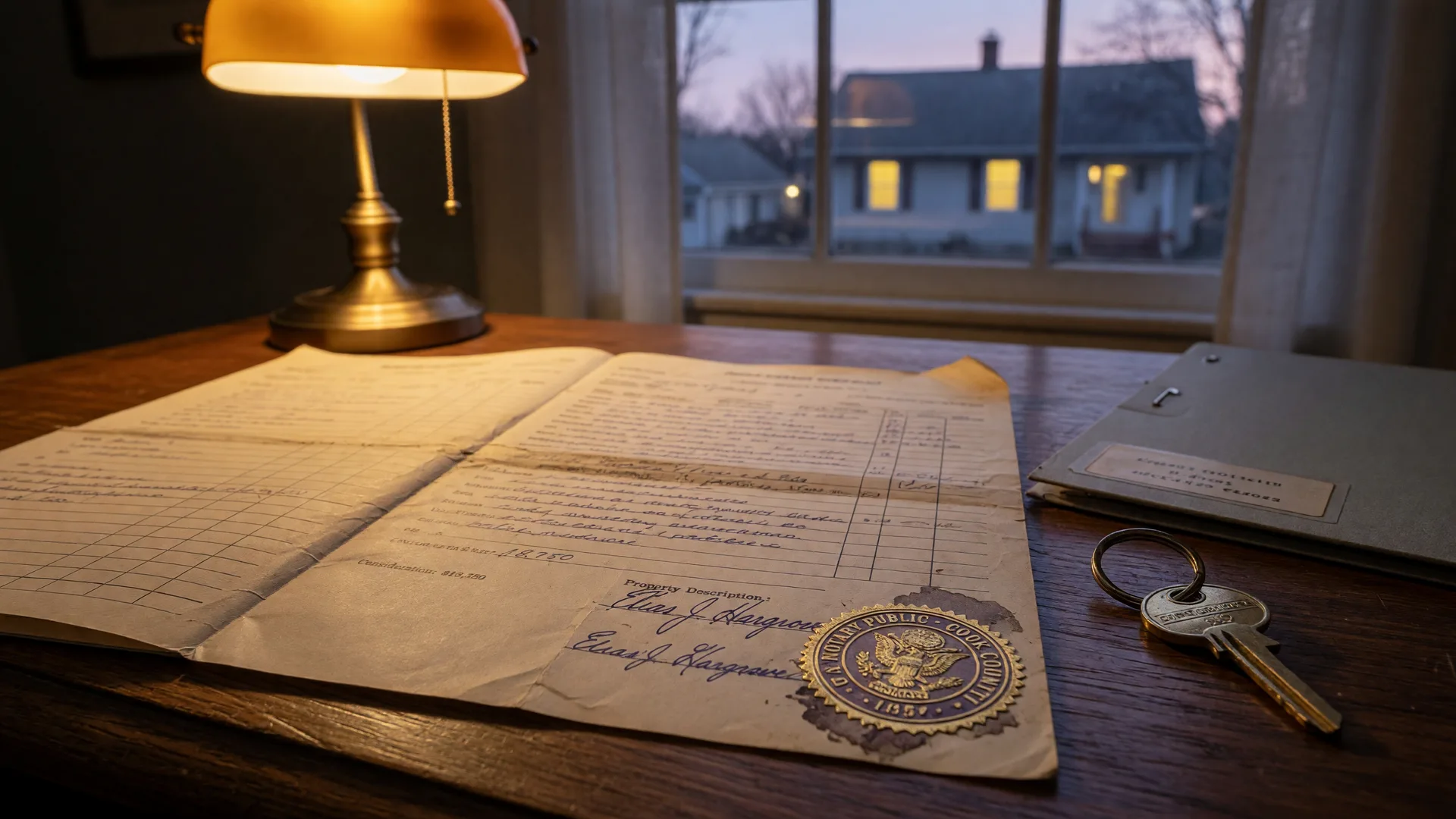
A payoff statement is the lender's official written figure for the exact amount needed to fully pay off a mortgage as of a specific date, and that date is the whole point. Because mortgage interest accrues daily, the true payoff amount changes every single day, so lenders issue the statement with a good-through date, usually 7 to 30 days out, after which the quoted total is no longer valid. When a closing date slips past that good-through date, the payoff expires, the exact amount changes, and the closing can stall until the title or escrow company gets an updated statement. This article explains why payoff statements expire, what happens when they do, and what buyers, sellers, agents, and investors should know to keep an expiring payoff from derailing a transaction.
Payoff expirations matter more than most people realize. Payoff paperwork is frequently described in the title industry as one of the most common last-minute closing killers, and in a market where inspections, appraisals, and negotiations are taking longer, closing dates are slipping more often. Every slip can push a payoff past its good-through date.
What a Payoff Statement Actually Is
A payoff statement, sometimes called a payoff letter or payoff quote, is the servicer's official calculation of what it takes to satisfy the loan in full. It itemizes the unpaid principal balance, interest through the payoff date, and any fees, and it usually shows the per-diem, the amount of interest that accrues each additional day. It is addressed to the borrower or, in a closing, to the title or escrow company handling the settlement, and lenders require written authorization before releasing it under privacy rules.
In a sale or refinance, the payoff statement tells everyone at the closing table exactly how much money has to be sent to the current lender so the old loan is fully satisfied and the lien can be released. If that number is wrong, or stale, the old lien does not get cleared, and the buyer cannot receive clean title.
Why They Expire: Interest Accrues Daily
The reason a payoff has an expiration date is simple arithmetic. The moment a lender quotes a payoff as of, say, October 30, that number assumes interest is paid through October 30. On October 31, the true amount is higher by one day of interest, and every day after that it grows. The per-diem on the statement is the lender's way of letting the payoff be adjusted for small delays, but it does not make the quote valid forever.
Different servicers handle this differently. Many statements are valid for 7 to 30 days from issuance, some are good for only about 10 days past the payoff date, and a few do not provide a per-diem at all, which makes even a one-day slip require a fresh quote. Under federal law, a mortgage servicer has up to 7 business days after a written request to issue an accurate payoff statement, so an expired quote is not a disaster, but it does take time and it does push the closing.
What Happens When a Payoff Expires
When a closing date moves past the good-through date, the title or escrow company cannot disburse against the old figure, because the exact amount owed is no longer the amount on the statement. The process works like this:
- The settlement agent requests an updated payoff statement from the servicer with a new good-through date, typically as of the new closing date plus a per-diem.
- The new figure flows onto the settlement statement and the Closing Disclosure, so the numbers buyers and sellers signed off on may change.
- Funding cannot be completed until the full, correct payoff is covered, because if the amount paid is short, the loan is not fully satisfied and the lien is not released.
- At closing, the payoff wire goes to the servicer first, and once the lender confirms receipt, the title company can record the release of the lien.
The practical cost is time and coordination. A payoff that expires adds at least a business day or two, and often more, to the calendar. If the closing date has already slipped once, the updated payoff can slip again, which is how a small delay becomes a domino. For a buyer with a rate lock, the cost is more direct: an extended closing can push past the rate-lock expiration date, and re-locking at today's higher rate costs real money.
How Title and Escrow Companies Avoid the Problem
The standard defense is ordering payoffs early and ordering them with a built-in buffer. Industry practice is to request the payoff roughly 7 to 10 business days before the scheduled closing, and earlier, often 2 to 3 weeks out, on complex files with a second lien, a recent servicer transfer, or a HELOC. Because a servicer has up to 7 business days to produce a payoff, ordering at 7 to 10 days out leaves room for processing and for the closing date to shift a little.
The other important practice is the two-date payoff. Instead of one figure good through a single date, the title company asks the servicer to quote the payoff as of two dates, usually the scheduled closing date and a fallback date a week later, along with the per-diem. If the closing slips a few days, the fallback figure is still valid, and no fresh quote is needed. Good settlement agents also verify the wiring instructions on the payoff by phone through a number they already have, because fraudsters know exactly when a payoff and a closing date are in motion.
Why This Matters More in Today's Market
This is a slow-market problem that shows up more in a cooling market. When homes sit longer, inspections and appraisals take longer, and negotiation extends, contract closing dates slip more often. Every rescheduled closing is a chance for a payoff to expire. In a market where the typical home is on the market longer and buyers are negotiating harder, agents and sellers should expect the settlement calendar to flex, and they should build a few extra days of buffer into every date they commit to.
It is also a fraud-awareness moment. The FBI's Internet Crime Complaint Center logged 12,368 real estate fraud complaints with $275.1 million in reported losses in 2025, and spoofed payoff and wiring instructions are one of the classic vectors: a criminal intercepts the news that a closing date changed, then sends a convincing updated payoff or new wiring instructions. The legitimate fix, requesting an updated payoff from the actual servicer through verified channels, never happens by trusting new instructions that arrive by email.
What You Can Do
- Sellers and buyers: tell your title or escrow company the moment your closing date changes. Do not assume your payoff number stays the same, because interest accrues daily.
- Real estate agents: give the settlement agent the updated contract date as soon as it is signed, and build a few days of buffer into the calendar before a payoff is set to expire.
- Investors: payoffs on investor loans, HELOCs, and second liens can carry different good-through windows, so confirm your payoff dates early and expect to reorder them if the closing moves.
- Everyone: never follow new wiring instructions that arrive by email or text. Call your title company or your lender at a number you already know and confirm before you wire a dollar.
The Bottom Line
A payoff statement expires because mortgage interest accrues daily, so the exact amount owed changes every day and the lender's quote is only good through a stated date. When a closing slips past that date, the title or escrow company requests an updated payoff, the numbers on the settlement statement change, and the closing is delayed until the old loan is fully satisfied and its lien can be released. Title companies prevent most of this by ordering payoffs early and asking for a two-date quote with a per-diem, and you can help by communicating every date change immediately and by never acting on wiring instructions that arrive by email. Payoff expiration is one of the most common last-minute closing problems, and it is also one of the most avoidable.
Sources
Reference Material
- Payoff statements expire because interest accrues daily, carry a good-through date typically valid 7 to 30 days (some about 10 days, some with no per-diem), and must be updated when closing slips: Nolo mortgage payoff guidance and industry payoff-letter references.
- Payoff letters described as a common last-minute closing killer and the standard practice of ordering payoffs 7 to 10 business days ahead, requesting two-date payoffs (as of closing and closing plus 7 days) with a per-diem, and confirming wiring instructions: Skyline Title Support, LegalGPS, and CTICGA (Chicago Title) payoff guidance.
- Mortgage servicers have up to 7 business days after a written request to issue an accurate payoff statement under TILA and Regulation Z (15 U.S.C. § 1639g): LegalClarity and Nolo.
- If funds arrive after the stated payoff date, the servicer adds per-diem interest through the actual receipt date, and a short payoff means the lien is not satisfied or released, which blocks the sale: Nolo and Pierce Law (NC) real estate Q&A.
- FBI Internet Crime Complaint Center (IC3) 2025 Annual Report: 12,368 real estate fraud complaints with $275.1 million in reported losses in 2025: FBI IC3, summarized by the National Association of REALTORS and HousingWire.
This article is provided for general educational purposes and is not legal, financial, or lending advice. Payoff timing, good-through dates, and release practices vary by lender, servicer, and state. Consult your title company, closing agent, or attorney for guidance on your specific transaction.